
 When I flew into Dakar three years ago, the city held so much mystique. I had spent almost 25 years imagining what the sights and sounds and feeling of Dakar might be without having any clue how close my ideas were to reality.
Then I spent a year living here and exploring the city’s ins and outs. One of the things I love most about Dakar is its scale – in just over thirteen months I was able to visit practically every neighborhood and knock off almost every item on my list of interesting places to see and things to do.
When I flew back into the city at the beginning of this year, aside from the fact that there was a whole new airport (!), everything felt very familiar. All of my old favorite places were still there, standing the test of time. Another thing I love about Dakar is its creeping pace of change in comparison to New York. There is sprawl and gentrification and crazy over-construction for sure, and it brings upheaval, displacement, and inequality with it. But – again, only as compared to New York, where every time you blink another community institution disappears – it feels much slower and more manageable.
And… some of the development is very welcome.
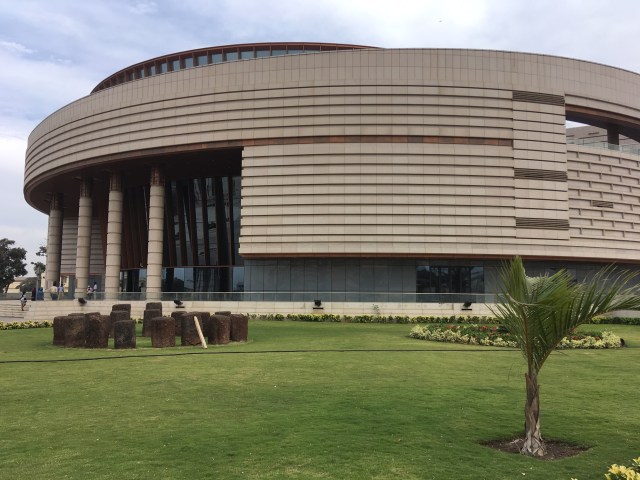
Case in point: the new Museum of Black Civilizations, which opened in January. I visited last week and it has some stunning art and artifacts inside.

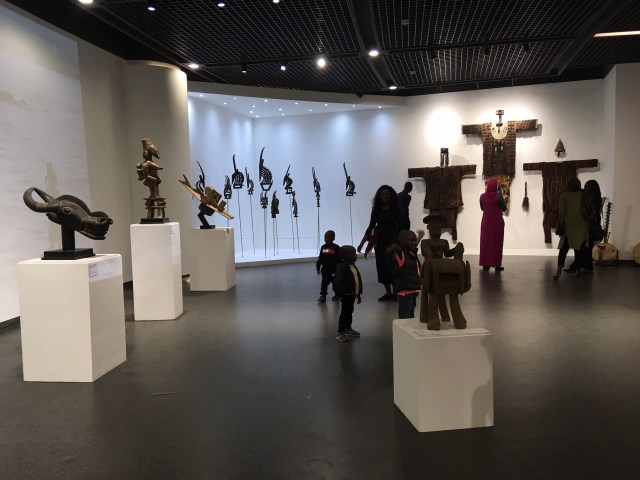

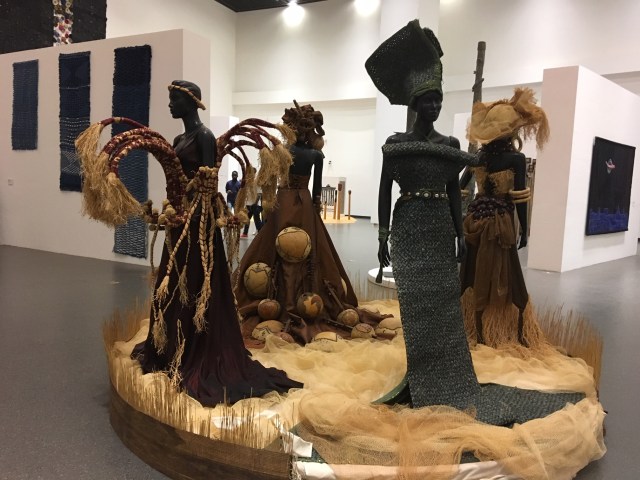

A little over half a century ago, Léopold Sédar Senghor, the first president of post-independence Senegal, announced his plans to build a major museum of African culture in the country’s capital of Dakar. Senghor, who died in 2001, did not live to see his dream fulfilled. Now, at long last, his vision is coming to fruition… Senegal has opened a sprawling museum that celebrates black civilizations from across the globe—and experts are hailing the institution as an important step forward in the effort to reclaim African artifacts plundered during the colonial period.
It both saddens and infuriates me to know that I have had better access in New York (and London, and Paris) to West African artwork and cultural objects than most West Africans do in their home countries. So, it was heartening to visit the new museum last week and to see the beautiful exhibits of ancient and contemporary work – as well as all of the as-of-yet unoccupied space that can be used for, among other things, items returned from abroad. (Restitution efforts were kicked up a notch in November with publication of a French-commissioned report recommending full repatriation of looted cultural heritage to any African nation that requests it.)
It was also the most amazing surprise to pass my favorite place in town – the old colonial railroad station just next door to the museum – and see that rather than being torn down and reconstructed over the past two years, it has instead been given new life in the form of a cleaning, a paint job, and some new glass.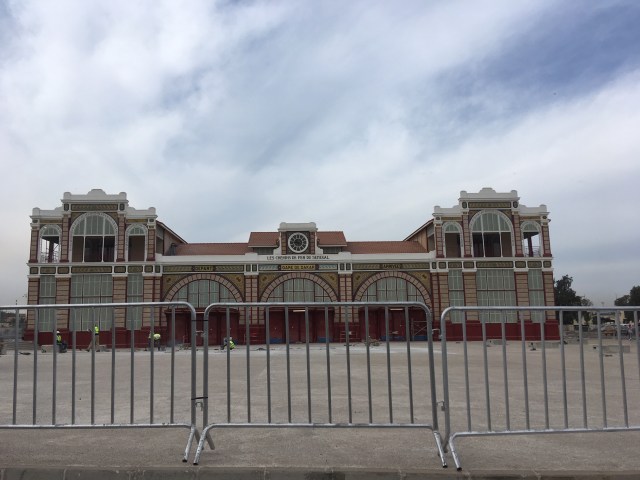
It is now even more stunning than it used to be. I took these photos from the car as we drove past, and I’ll try to get down there to check out the space on foot soon.
 The station serves as the terminus of the just-finished rail line between the new airport and Dakar. I haven’t really kept up on those developments so I have no idea if the line is considered a good thing, a bad thing, or a little of both. But the rehabilitation of a gorgeous decaying train station seems 100% wonderful.


 talk foreign to me