It’s going to be a long week. Hang in there!

I didn’t have the energy to do much posting last week, though I had some links I wanted to share. So I’ll kick off this week with them instead:
 
I adore The New York Times’ Modern Love column. Last week’s was language-related. (And this week’s was heart-breakingly beautiful.)
 
You know you’re living in a sad world when this is the word of the year.
 
The Cockroach Hall of Fame Museum in Plano, TX is notably absent from this otherwise super list of unique and wonderful museums
 
This explains why I have so much trouble with English language programs overdubbed into French, and why in-person conversations are always easier for me than telephone calls.
 
I found this article helpful: things to keep in mind when you’re frustrated with your language learning.
Have a good week!
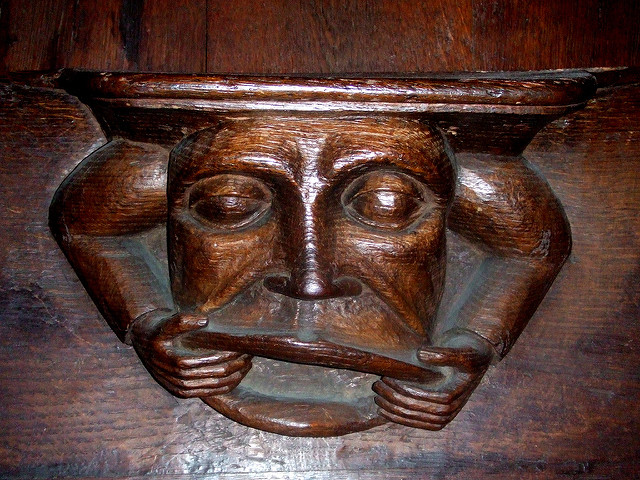
[PS the photo is from near my house in Dakar. There is a toy vendor who sometimes hangs dolls and action figures from trees in rather macabre fashion. It always makes me think of that motivational poster of the cat in every elementary school classroom in the 80s. This is the more cynical version, updated for adulthood / the horrors of 2016.]

mes rêves

I’ve finally found a reason to be thankful for sleeping lightly. This past Saturday, after spending much more time than usual with Mamie and Tantie (we hit up the holiday market during the day and went dancing at night), I dropped into bed exhausted – both from staying out late and from speaking so much non-stop French. 

You know when you’re in that liminal state between wakefulness and sleep and you catch yourself thinking nonsense thoughts? I was doing that in French, which made whatever I was thinking seem that much more bizarre (and awesome). I quickly dropped off to sleep and started dreaming. A guy, maybe a friend?, was distraught because he had found out his girlfriend was rumored to have once been an escort or porn star or something. I responded with a lecture about how even if that were the case, it wouldn’t change who she was, and he should think twice about reacting harshly. (My dream self is not necessarily representative of my real-life self, I’d like to note.) 

It was around this point that my dream turned lucid, and my consciousness interjected, “Wait a minute… I’m dreaming in French!! This entire speech I’m making is in French! And check out these crazy complicated conjugations I’m doing!” But then my lucid self questioned whether I was actually dreaming in French or just dream-speaking in French, i.e. putting nonsense words together like I had been doing right before falling asleep. So my conscious self went word for word over whatever I said to the guy next and confirmed that yes, I was in fact dreaming in (somewhat) properly formed, logical French. This in turn inspired my dream self to sermonize further just to hear herself speak.  

And then my full bladder unceremoniously woke me up, allowing me to recall that I had been dreaming, to remember a few words and phrases of what I had said, and to confirm in real life that I had crossed over the dreaming-in-French threshold. I have never peed so happily in my life.

Why? Because many, many people have told me that they knew they were becoming fluent in their foreign language when they started dreaming in it. While French has shown up in my dreams here and there, it has always been just a few words or phrases, and I was always too deeply asleep to tell whether it was true French or babble. Lately, I’ve been feeling that my progress in French is crawling along and that I’ll be dead before I’ll be proficient. But now I have a small glimpse of hope. 

P.S. Have you ever had lucid dreams? It is so much fun. I used to be an expert at it when I suffered from insomnia in my 20’s and was always on the edge of rather than fully asleep. Not only would I be aware that I was dreaming, but I could also sometimes control the dream like a self-designed virtual reality game. These days, my better sleep comes at the expense of lucid dreaming… though some people think you can train yourself to do it.

When bad French happens to good people

I’ve mentioned some of my French faux pas before. Those were the tip of the iceberg. Here are just a few of the blunders I’ve recently made:

– Everyone in Senegal had to register their phones with their service providers this month. So I dutifully went to the Orange store and told the receptionist what I was there for. She directed me outside and told me to turn left and look for… something. It was a word I didn’t recognize but whose closest approximation to one I do know is “la vache.” So, I stepped out the door and looked around rather skeptically for a cow in the parking lot. This being Senegal, I wasn’t sure whether it would take the form of a real live cow or just a picture of a cow on a sign. (Orange’s new mascot, perhaps?) Predictably, I found neither, but I did see a couple of guys sitting underneath one of those temporary wedding gazebo thingies. So I asked them where to go and they said, “Right here.” I responded, “But where is the cow?” They looked at me quizzically. Considering that the only other thing in the parking lot was the gazebo thingy, I pointed upward and asked, “What is this called?” They answered, “une bâche.” Riddle solved.

But Google Translate tells me that “une bâche” is a tarpaulin. While I might refer to the sheet laying on top of the thing we were standing under as a tarpaulin, I wouldn’t use that word to refer to the whole sideless-tent contraption. So that means I now know two words/phrases in French that I don’t have a word or phrase for in English.

– In the midst of an in-depth conversation that was going rather well, I told someone that something was “obvi” to me. The person I was speaking to was completely baffled. So I clarified in English, “Obvious.” He laughed and laughed and told me that obvi was “cute.” I have no idea how I came up with this nonsense word except that “obvs” is young person shorthand for “obvious” in English, so maybe my brain short-circuited and thought I could do the same in French? Or maybe I just fell back on my handy trick of saying English words I don’t know in a French accent and hoping for the best? (Half the time it works. And in fact, it would have been just fine had I gone with apparent, évident, claire, or visible instead. But I chose the one synonym that could not be Frenchified.)

– The night after a mass shooting in the States, dinner table conversation among my Senegalese hosts and their Senegalese guests turned almost immediately from sympathy to political commentary, as I silently smoldered with grief and increasing agitation. When I got up abruptly they asked me what I thought and I replied more emotionally than I would have liked, “Je ne veux pas parler. On est en grève.” But what I meant to say was, “On est en deuil.” The former means “on strike,” while the latter means, “in mourning.” I always mix up the two, probably because grève reminds me of grave and they both start with “en.” Anyway, I didn’t realize I had made a mistake until it was too late to correct it. At the time, I thought their shocked faces were a reaction to the force of my conviction, but it turns out it was more an illustration of their utter confusion.

– I am endlessly mixing up moulu, or ground, with mouillé, or wet. I brought back coffee beans from Ethiopia and kept asking where I could get them wet. On the other hand, after a rain storm I reported that I was completely ground. My misuse has verged on the perverse…

– As has my confounding of sale, sel and salé, or dirty, salt, and salty/savory, respectively. When I’m not shocking people with this particular set of mix-ups, I’m offending (and sometimes both). I’ve called myself salty and lovely-looking fresh-cooked meals dirty, and on more than one occasion I’ve told servers that I am in the mood for something dirty. I can only hope that this phrase doesn’t have the same nuance in French as it does in English.

– This one is not my own faux pas, but I was part of the audience for it. I was having dinner with an American woman and a Senegalese man and I can’t remember why but we were talking about various medical topics. The woman asked the man, “Quel type de singe as tu?” As in, what type of monkey do you have? She meant to ask him, “Quel type de sang as tu?” or, “What blood type do you have?” But as is often the case with faux pas, the native speaker couldn’t figure out what the foreign speaker could have possibly meant to say, and the foreign speaker couldn’t figure out what the problem was. And I was too busy laughing at both of them to help clear up the confusion.

More to come, I’m 100% sure…

[Photo: Brad]

weekend, weekday, what’s the difference

This has been a devastating week, and I am devastated. It would be wise for me to avoid making political statements in public forums because of my work as a quasi-journalist (I say quasi because I don’t make videos for media; I make videos for mission-driven organizations). But it’s hard to convince my professional self-interest to override my personal need to acknowledge the absolute horror of the current situation, before going back to my comparatively inane subject matter of language learning and travel loving. And also, it offends me to think about what happened on Tuesday as strictly political, as though the survival of the planet and the protection and equality of marginalized groups is a question of politics rather than one of fundamental humanity.

Anyway, I will say this and then attempt to shut up about it (only on this blog, not in my personal life): humanity got us into this mess, and humanity will now have to get us out of it. The tragedy of the human condition is that we’re constantly repeating our history and digging our own graves while convinced we’re acting in our own best interest. But the beauty is that, as a species at least, we have a huge capacity for hope, community, solidarity, inspiration, creativity, resilience, organization, mobilization, and resistance, even in the darkest of times. I am going to draw upon all of those things in the coming days and months, because God knows if I don’t, I’ll succumb to absolute and utter despair not to mention fail in my responsibility as a human being in the family of man.

Actually, just one last thing. This week has been a wake-up call for me. I’ve realized that I repeatedly acknowledge my various forms of privilege as a “Not it!” of sorts, a substitute – often though not always – for doing the much harder work of dismantling it. It’s not that I’m all talk and no action; it’s just that I don’t do nearly enough.

I’m pretty good at keeping promises to myself, as this blog attests. So this week I promised myself to do more, much more, than I am currently doing. I’m still working out what doing more will look like but I know it’ll be a four-pronged approach: education/listening, time/volunteering, money/donating, and activism/policy and legislation.

Okaaaaay…. Now for your weekend links! As though this week was all just a bad Kafka dream and you can trouble yourself with anything other than how the fuck (as Aaron Sorkin said, there is a time for this kind of language and it’s now) to mitigate the damage:

My Latina friend’s dad wore this awesome (af) hat on election day. As soon as I sufficiently master French I’m going to reward myself with one.

On the wellness vacation.

Almost a billion people have traveled abroad so far this year, and other interesting statistics on global tourism.

Colorful map depicts what languages New Yorkers speak at home.

Weltschmerz

Another untranslatable word, apropos to these dark days, brought to my attention by my friend, Kete. More on its meaning here.

(get over the) hump day inspiration: Gloria Steinem post-election edition

Taken from Gloria’s Steinem’s NPR interview this morning.

Today I mourn. Tomorrow, I redouble the fight.

Tanzania part 2: Zanzibar

After our safari adventure, Randy and I flew to Dar es Salaam, where we spent a day seeing the sights before taking the ferry to Zanzibar the next morning. Dar paled in comparison to Zanzibar so I’ll just skip it and get right to the good stuff. Continue reading

5 things I will never get about French

Because I respect my elders, I am willing to accept that thousands-of-years-old French has a rhyme and reason to it that my relatively infantile self fails to grasp. Still, you cannot blame me for getting frustrated with certain facets of the language that seem objectively insane if you’re a non-native speaker. To wit:

1. Numbers above 69

I have stated this before but it bears repeating:

It’s like they let the village idiot come up with the French numerical system at his daughter’s wedding. He did pretty well for himself up to 69 – echoing the Roman decimal system by counting in tens… but then he got shit-faced and started adding and multiplying random numbers together to come up with everything from 70 to 99. What else could account for soixante-dix (sixty-ten, i.e. 70), or quatre-vingt-dix-neuf (four-twenty-ten-nine, i.e. 99… because, of course, four times twenty plus ten plus nine is 99)?

I have recently learned that Belgians, Swiss, and Congolese use a more logical numbering system in which seventy is septante, eighty is huitante or octante, and ninety is nonante, and I have further learned that the weird French way may be a Celtic leftover. I tend to think that when your leftovers have gotten rotten it’s time to throw them out, but who am I to argue with the Académie française?

2. Reflexive verbs that are not actually reflexive

Here is the definition for reflexive. Pretty simple, right? And yet, French reflexive verbs are not bounded at all by that definition. While I can acknowledge that French reflexive verbs consist of more than simply verbs in which the action is performed on oneself (when the subject is singular) or each other (when the subject is plural), I cannot intuitively grasp it because I see absolutely no logic in it. I completely understand why you would say, “Je me habille” or “Nous nous marions”- because you dress yourself and you marry each other. But why do people say, “Je me souviens?” as though they are remembering themselves and not the memory? And why is it, “Je me promene,” as though you are a dog walking yourself, but it’s also “Je marche” and not, “Je me marche,” when marcher and promener both mean “to walk”?

By the way, I’m asking these questions rhetorically here, but I do realize there are answers to them all… And that sometimes the answer is just, “Because.” Languages are funky ever-evolving things with a million exceptions to every rule, and I know that English is as funky as the rest of them.

Regardless, I will continue to vent. Moving on…

3. Gender

Setting aside for a moment the difference between gender and sex… Chairs have neither vaginas nor penises, so why assign them a gender? Especially when considering the following:

– Certain synonyms have different genders. For example, un vélo (masculine) and une bicyclette (feminine) are the same thing, a bicycle. A river can be une rivière (feminine) or un fleuve (masculine). How can the same object have a different gender depending on what you choose to call it?

– Then there’s the ridiculousness of a word like bébé (baby) being masculine whether the baby in question is a girl or a boy. So if you were referring to Baby Jane, you could say, “Elle est mignonne” if you wanted to say that she is cute, or you could technically say, “Le [not la] bébé est mignon” and be referencing the same damn baby. Actually, I am unsure whether you would agree the adjective, mignon, with the noun, bébé, or with the actual gender of the baby, female, in which case it would be “Le bébé est mignonne.” Anyone French care to tell me which is correct?

Regardless, the quagmire itself is as good an argument as any for the ridiculousness of gender both in language and as a biological construct. How about we all go genderqueer in life and language and just call everything and everyone ze from now on? (This would work in French as well as it does in English and would play right in to cute stereotypes about French accents to boot.)

Here’s a lengthy but interesting article on the subject of French genders (much of which makes a mockery of my silly complaints).

4. Swallowed letters

French must have more homophones (words that sound alike, but have different meanings and spellings) than any other language, because only like half their letters are actually pronounced, reducing the possible sound combinations significantly. This is especially true of end letters, which it seems like you are supposed to ignore about 70% of the time.

Take for instance: cent, sang, sens and sans. Thanks to the French distaste for sounding end letters out, these words are all pronounced the same (unless they come before a vowel that starts the next word, but let’s not even get into that).

Why bother adding all those extra letters to words when you’re not going to actually pronounce them? If sans and sang are pronounced the same why not just make them both “san”?

Then there’s the silent h, and the silent “ent” verb ending. As in, mangent is pronounced the same way as mange. Seriously, that is an entire syllable that’s just ignored. All I can do is shake my head (and be grateful that at least when I conjugate my verbs incorrectly, half the time no one knows because it’s all pronounced the same).

5. Possessive pronouns agree with the thing possessed and not with the possessor…

…So what is the point? Constructing sentences this way is often redundant, and it also eliminates the possibility to minimize confusion about who the possessor is.

For example, let’s say John and Mary are standing in a room. The only other thing in there is Mary’s chair. I walk into the room with my friend and, don’t ask me why, I feel the need to tell her:

It’s her chair.

In English, since Mary is female, the pronoun is feminine. Because the pronoun is feminine, my friend now knows that the chair is Mary’s and not John’s.

But in French:

Il est son fauteuil.

The chair is masculine, and that is indicated three separate ways: with “il”, with “son” and with the gendered noun itself. Yet my friend still has no idea whose chair it is, Mary’s or John’s.

WHYYYYYY?

And for good measure, a sixth, very specific thing:

The similarity in the meaning of almost every pouvoir conjugation is a total brain twister for me. To wit:

Passé composé: J’ai pu (I could)

Passe Imparfait: Je pouvais (I could)

Plus-que-parfait: J’avais pu (I could)

Futur simple: Je pourrai (I will be able to…. aka I could)

Futur antérieur: J’aurai pu (I could have)

Conditionnel Présent: Je pourrais (I could)

Conditionnel Passé: J’aurais pu (I could have)

Seven different French conjugations, but only two different English translations. Yes, I know that there are subtleties within the French that I could have better indicated in the English, and I also know that rules of common usage dictate when to use which conjugation even if there’s not a one-to-one French to English formula to follow, but… it still boggles my brain to think about the fact that there are seven possible ways to say what we only really say two different ways in English.

But… brain boggling seems to be the name of the game when it comes to learning a foreign language, so all is forgiven, and onward and upward! I’ll just keep telling myself: the more fried, the more French.

[Photo: Sarah Tarno]

have a nice weekend!

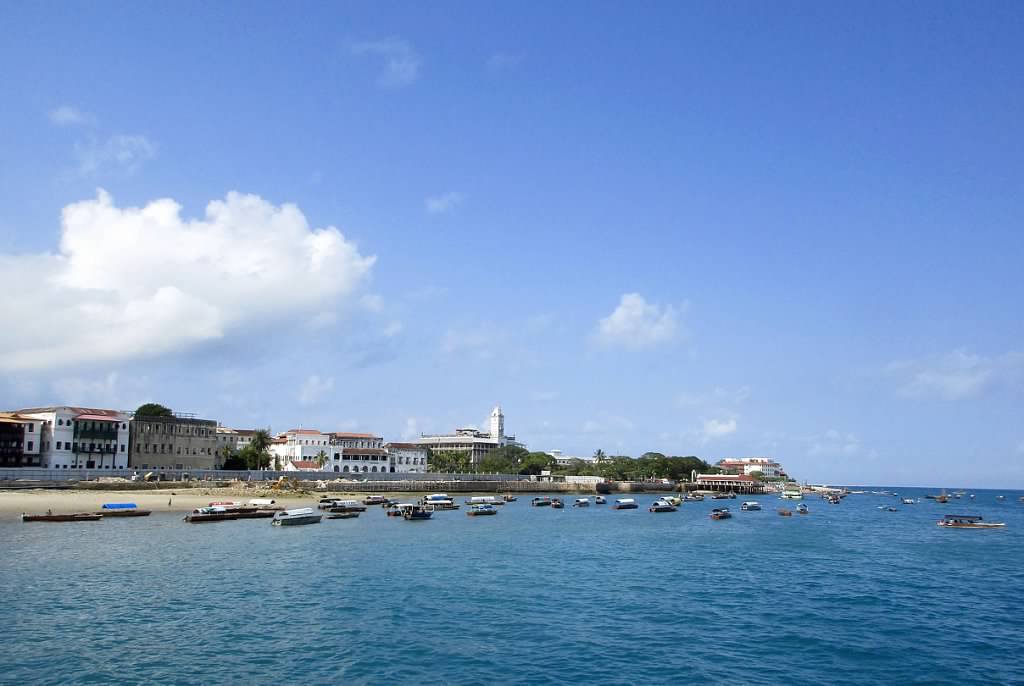
What are you up to this weekend? I plan to lay low in an effort to relax away my growing anxiety about the American election. Maybe I’ll spend a day sitting by the pool at Hotel Savana, above, sipping a (recently mentioned) jus de bouye. Or maybe I’ll just hide under the covers for five days / forever, depending on the outcome.

Here are some interesting reads I’ve gathered for you over the past couple weeks, to keep you distracted if you’re as stressed as I am:

I follow a blog called “About Words,” which every week describes new English words in circulation. Last week’s were fascinating. Can you guess what a bobu or a midult is?

And do you know which country is the world’s most generous to strangers?

This awesome map charts out a cross-country US road trip that visits every national park.

Speaking of maps, here is a new world map that looks bizarre but is way more accurate than the one you’re used to. (Now I understand why getting from Senegal to Ethiopia took me ten hours.)

I love this woman and I am envious of the adventure she’s on. (Though I realize I’m on a pretty awesome one of my own.)

Every Italian who turns 18 next year is eligible for 500 Euros from the government on their birthday, to spend on cultural items and experiences. Fitting for one of the most culturally spectacular places on Earth.

5 intriguing things about Liberia

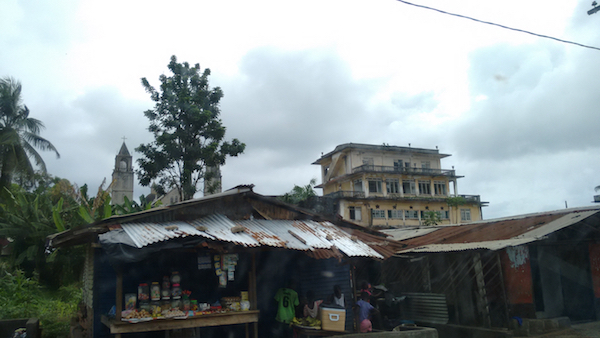
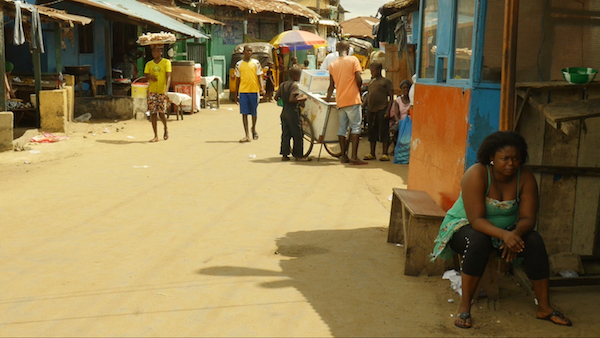
I’ve been meaning to write a post about certain things that struck me while I was in Liberia months ago. These “things” are all fairly nuanced and a certain amount of research is required to delve deeper into the whats and hows and whys in order to write intelligently about them. I started the research but never finished it, and at this point it doesn’t seem like I ever will. The problem is that I still want to write about the things that struck me.

So what I’m going to do is throw them all out there half-formed, like conversation starters as it were, and I’ll let you do further research yourself, should you be so inclined. I’ve even provided links for you! But I make no claims as to the veracity of the information within those links. So basically I’m not very helpful at all…

1. There is a dual currency system.

In Cuba there are two official forms of currency: one tied to the American dollar and used mostly by tourists (the CUC), and one subject to crazy inflation and used mostly by everyday Cubans (the CUP).

In Liberia, it goes one step further: the actual American dollar is one of the two forms of legal tender. For example, my ATM in Monrovia spit out my money in US dollars. I was able to use it throughout Monrovia, though it wasn’t widely accepted in the countryside. Also, the value of Liberian currency is tied to the value of the American dollar somehow. I find that fascinating, and yet meaningless because I never took an econ class in my life and have no idea of the implications.

More on this here.

2. Its origin as a colony for African Americans who were formerly enslaved in the United States is fascinating in itself, but the way in which that origin has impacted its history up until the present day, is also intriguing. (For example, ethnic tensions rooted in colonization at least partially influenced the Liberian Civil War that wracked the country for fourteen years from 1989 – 2003.)

I’m going to link to Wikipedia here and let you do further digging if you so choose.

3. It has an interesting (to use the most neutral term possible) relationship with several countries.

The United States: because of aforementioned history and close political ties.

China: because the Chinese are building roads and who knows what else across the country in exchange for… well, I’ll leave that up to you to decide.

Lebanon, or rather the Lebanese: Because there is a huge Lebanese diaspora in Liberia (and throughout West Africa). In Senegal, the Lebanese, as former French subjects in a former French colony, did well for themselves. They are full-fledged Senegalese citizens who own a large proportion of the wealth and businesses here. But in Liberia, where citizenship requires you to be of black African origin (yet another fascinating subject), the Lebanese are barred from owning businesses, because there’s another law that says only citizens can do that. So the Lebanese apparently have shadow partnerships with Liberians, who officially own the businesses while the Lebanese manage them.

More on American-Liberian relations here.

More on the Chinese in Liberia here, and about Chinese investment in Africa here and here.

More on the Lebanese in West Africa here and here.

There’s also a fairly new book about the Lebanese in West Africa that I’d like to read.

4. Liberia has some exceptionally strong and politically powerful women, most notably the President, Ellen Johnson-Sirleaf, and the leader of a women’s group that was integral to ending the civil war, Nobel Peace Prize winner Leymah Gbowee.

And yet, levels of sexual and domestic violence in the country are off the charts, and laws to protect women and punish perpetrators are fairly new (and often weak), or nonexistent. For example, spousal rape was only criminalized in 2006.

I find this contrast really thought-provoking.

5. This is a small thing, but I found it fascinating that almost every shop in Liberia was called a “business center.” I guess my larger fascination is with the evolution of Liberian English and with its particularities and distinctions from American and British English. For example, I loved that they don’t use the word “pregnant” there – they say that the woman “got big belly.” And diarrhea is known as “runny stomach.” (These are the things you notice when you’re working on a video about public health.)

More on distinctive Liberian vocabulary / speech here.