that’s a lot of words

words

I recently read: “There are seven times more words in English than in French (500,000 versus 70,000), which suggests that French relies on contextual clues to resolve semantic ambiguities to a greater extent than English. Many words in French have multiple possible meanings… which means that the listener is responsible for discerning the intention of the speaker.”*

I suppose I could be heartened by the fact that there are only 60-some-thousand words I don’t know in French. Apparently it could have been much worse.

I’ve always found it strange that a country known for romance has the same word for like and love – that you have to figure out the meaning of aimer based on context clues. But now a correlation between romance and multi-meaning words occurs to me. Fewer words + more interpretation = greater opportunity for happy accidents in which one person misunderstands the other’s semantical intentions, believes that love is being declared, and is inspired to respond in kind. Perhaps France is brimming with l’amour because everyone’s living out their own version of a screwball romantic comedy.

As a related tidbit, this little quiz estimates that I know 30,900 English words. I will try to keep this in mind the next time I’m feeling dumb as a brick while attempting to make simple statements in Spanish or not-so-simple ones in French.

P.S. For English learners (and speakers who want to boost their vocab), here’s an aptly named site.

* I read this quote from Erin Meyer’s “The Culture Map” here.

[Photo: Martin Latter]

verveine

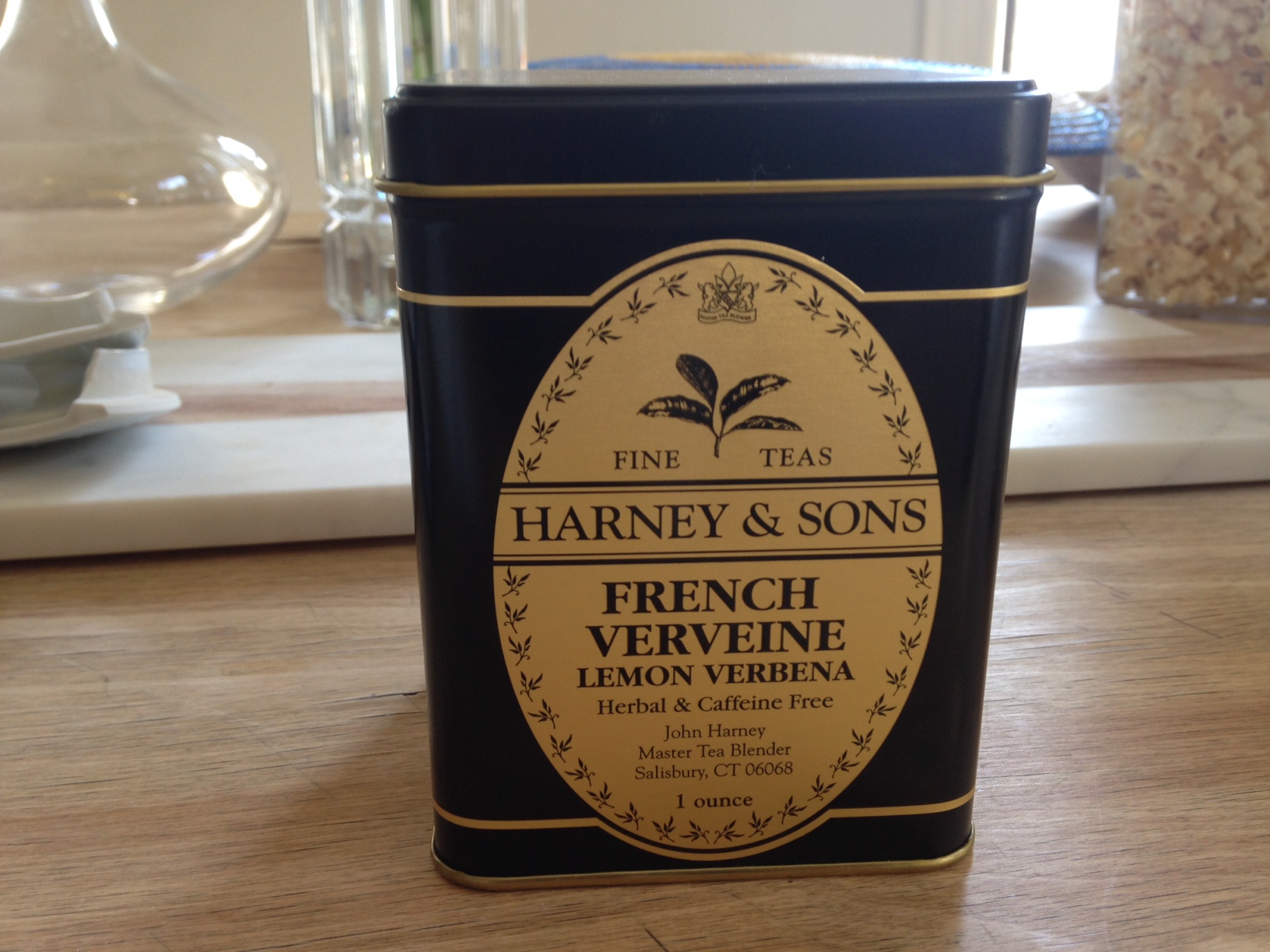
Harney and Sons vervaine

Speaking of delightful French gastronomy… while I was in France in January my after-dinner drink was always verveine, which I had never heard of before but which seems quite popular there as a non-alcoholic digestif. I had no idea what I was drinking until I got back to New York. Continue reading

It’s the weekend…

reading in bed

…and I’m exhausted. Looking forward to accomplishing very little aside from a lot of hanging out this weekend.

But before I embrace sloth and hibernation, I need to set down some links, because they burn a hole in my brain when I leave them in my inbox too long without compiling and posting them here. So, a few things for you to read during your weekend lay-about, you lazy slugabed*:

Linguists found a common language root 6,500 years old.

More fascinating exploration of our ancient mother tongue.

Tfw you fail a language quiz that measures how hip you are. 

The best city in the world for dating is…

How to say 21 curses in 6 languages (some of them amazingly inventive).

Can Louisiana resuscitate their distinctive French?

Think about this before you snap your next vacation pic.

Don’t get stranded on France’s disappearing road. 

How to start your own language meetup (take note, Philippe!)

And if you’re in New York, don’t miss the Rendezvous with French Cinema.

*(Isn’t that a brilliant word? I just learned it.)

on soulmates

soulmate moose

Random Valentine’s Day musing:

I was reading a French fashion magazine when I came across the word âme soeur, which translates literally to sister soul. I wondered if this was the French term for soulmate, and indeed it was. Isn’t that a lovely way to put it?

That is all.

[Photo: Patrick]

happy weekending!

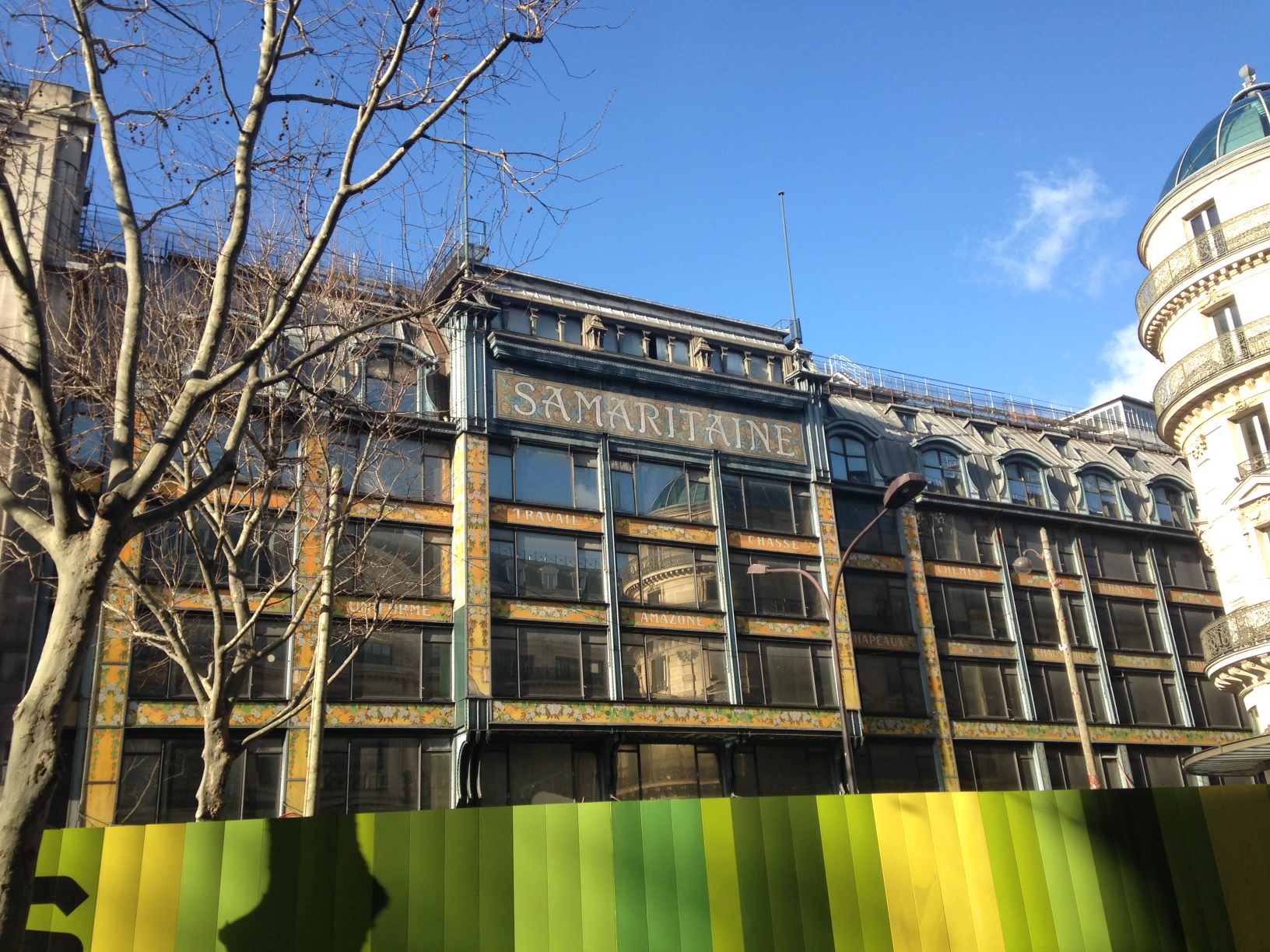
la samaritaine

This weekend I plan to take advantage of the frigid temps to finally – and I really mean it this time – burrow in at home and compile all my French vocab words into one specially formatted file that will (eventually) become an Anki deck. I say “eventually” because making the actual deck will probably take me another six months to get around to.

For those who are also hunkering down this weekend… here are some interesting reads and little tidbits to keep you company: Continue reading

I can’t believe this is what I’m reading now

Tomorrow Is Another Day by Lori Nelson Spielman

After weeks of laboring through one inscrutable page per sitting, I finally finished my French Patti Smith book and was ready to move on to something kinder and gentler on my French reading disposition. While in a convenience store at Charles de Gaulle on the way back from France, I realized that the airport would be the best spot to find exactly what I was looking for: super easy and formulaic chick lit whose thread I could not possibly lose even in a foreign language.  Continue reading

Everything I ate in France

tea time

I’ve heard a lot of superlatives about Paris – that it’s the most romantic city in the world, the most beautiful, the city of light. But I think its most-fitting top billing is tastiest.

Why? Because I got a contact high every time I passed a bakery. Because the freshly made mayonnaise at a hole-in-the-wall cafe was so far beyond what’s eaten in America that the two deserve different names. Because a 3:00am omelette at a randomly selected bistro was the best I’ve ever had. Because my first bite of entrecôte with bearnaise sauce propelled me to break my 3-day French-only streak with an awestruck, “Are you fucking kidding me?” directed at no one in particular, since I was alone.

And that’s only Paris. In Alsace, they took meat and potatoes to a whole new expletive-inducing level. In fact, except for one unfortunate breakfast, everything I ate in France was better than 90% of what I’ve eaten in America.

Granted, I am one for hyperbole. But even if you take me with a grain of salt (which, incidentally, was also more delicious in France), there’s no denying that the French have a very special way with food.

So without further ado, here’s everything I ate in France:

repas

First row: (Alsacienne) baeckeoffe; smoked duck and goat cheese salad; camembert with pine nuts and honey; best-tasting omelette and fries; charcuterie and cheese plate. Second row: confit de canard; choucroute garnie – note the thing that looks like a layer cake but is actually the fattiest, most delicious chunk of ham ever sliced; the (weak link) omelette; smoked salmon; steak with potatoes and pesto. Third row: gluten-free croque monsieur made by philippe; coquilles st. jacques; picnic lunch bought at the only open store in a tiny alsacienne village; steak and vegetables; pot au feu (after the soup was consumed). Fourth row: smoked salmon and goat cheese salad; breakfast of cheese and jam and nutella; potatoes and lardons and extra fat; entrecôte with bearnaise sauce; chef salad. Fifth row: Homemade jams; adorable baby radishes; three glutinous things that, full disclosure, I watched my dining partners eat but did not actually eat in France (two tarte flambees and a croque monsieur).

And that brings us to… DESSERT!!!

desserts

First row: creme brulee; gluten-free canelé and madeleines from Helmut Newcake; pavlova; delightfully decorated ice cream; Laduree macarons; a chocolate-covered meringue on top of mocha-flavored buttercream – I think this type of pastry might be called a merveilleux (and it certainly was); chocolate pot au creme, caramel pot au creme, pistachio creme brulee and caramel creme brulee (aka best breakfast ever); cherry, straciatella and chestnut ice cream; rose-flavored sorbet and coffee ice cream, because we couldn’t find rose-flavored ice cream anywhere; a gluten-free madeleine; creme caramel; some sort of ice cream cake; gluten-free chocolate cake and gluten-free chocolate cookies, made by Philippe; chocolate mousse; a gluten-free religieuse from Helmut Newcake; and gluten-free tarte tatin, also made by Philippe.

The only thing on my wish-list that I didn’t end up eating and really wish I had is raclette. It sounds like God’s gift to cheese and potato lovers, but the specialty restaurant we tried to go to in Paris was all booked up and we ran out of time to find an alternative. I guess this gives me a reason to go back…

French is a many-humped camel

camel face

The rule I had set for myself in France was to spend no more than one cumulative hour speaking or being spoken to in English during the first eight days before my English-speaking friend arrived for the final weekend. I ended up playing a little fast and loose with that rule but on the balance I would say I spent 90% of my time living and breathing French.

It was the first time since I learned to talk that I relied upon a language other than English for longer than a few hours. I hadn’t anticipated how emotional it would be. In fact, it felt sort of like going through the seven stages of grief, sped up:

Shock: On the first day my sleep-deprived mind went blank and I was basically mute.

Denial: On the second day I literally stamped my feet and had a temper tantrum (though at least it was in French!).

Bargaining: On the third day I tried to convince Philippe to speak to me in English, even if I wasn’t allowed to speak it myself. Thankfully he resisted my whining.

Guilt: On the fourth day I started missing my three year-old niece and by the fifth day it had gotten so bad that I had no choice but to Skype with her, which of course I had to do in English.

Anger: On the sixth day I used my French to mock the French language and all of its busted rules. Why on earth would a civilized people so unnecessarily complicate things by assigning genders to objects? WHY??? And why would anyone with any mathematical logic whatsoever call the number “98” four-twenty-ten-eight instead of ninety-eight?

Depression: On the seventh day I had to think through something important in English. I found myself braindead and unable to recall the simplest words. I felt like I had somehow lost my native language in the space of a week, yet come nowhere close to gaining a new one.

Acceptance / Hope: On the eighth day I scrolled through my list of all the new words I had learned (more than 200!) and realized that for the first time in the year since I revived my French practice, I could actually feel the progress. When you’re learning incrementally, inconsistently, and non-contextually, progress is only visible from a distance of months or even years. But with just one week of immersion, I noticeably reduced the amount of translation I did in my head, I started talking more quickly, and I felt more capable of conveying complex and abstract thoughts. I began to notice that French people could understand me (albeit with difficulty) and I could understand them (when their speaking speed didn’t panic me). Crazy! Miraculous! Proficiency no longer felt like an impossible dream, and it seemed likely that if I just keep at this, I will one day be a true French speaker.

So I think I got over some sort of hump in France. Not the final hump (fluency) or even the close-to-final hump (proficiency), but a hump nevertheless. It’s the same sort of hump I had to get over to learn clarinet, video editing, and driving a car. The one I never think I am anywhere near to cresting until the moment after I get to the other side, as if by magic. Looking back, it feels like everything has changed overnight and I finally have an innate understanding – if not yet a mastery – of the thing that felt so foreign and frustrating to me the day before.

I’ve heard this moment referred to as the “epiphany point,” which seems fitting for such a momentous occasion… one that took 22 years from my first French class to get to! I can only hope getting over the next hump doesn’t take quite so long.

(photo: Adam Foster)

Frahnch food

Ridiculously, I’ve had these lines repeating in my head since I booked my ticket to Paris:

That is all.

that time my brain was like Apple’s spinning wheel of death

book retrieval

Last night I got a taste of how dumb it was to sign up for a Spring 2015 Spanish class on the heels of exclusively and intensely practicing French for a year. My Israeli cousin was in town with her four and a half year-old daughter. Even though I hadn’t spoken Hebrew in about a decade, I assumed it couldn’t be that hard to make conversation with a small child. I assumed wrong. Her vocabulary was way (way) bigger than mine, and every word that came out of my mouth was delayed by the process of first thinking it in French, then translating it back to English, then searching my brain like a Rolodex for the same word in Hebrew. And inexplicably, every time I wanted to say kayn (yes), si popped out instead.

Meanwhile, my cousin, who never spent more than a couple weeks at a time in an English-speaking country, is perfectly fluent in my mother tongue, because Israelis start learning English in second grade. When my brother, sister and I were little and used to visit our also-little cousins, we always returned to the States babbling in Hebrew. It was an equal playing field then – both sets of cousins picking up words from the other via immersion, both equally reliant on making ourselves understood through miming and the international language of child’s play. That kind of language acquisition is sometimes fun but more often frustrating, and I distinctly remember breathing a sigh of relief when the last of my cousins started second grade and the American kids could shift the weight of responsibility squarely onto the Israeli ones. From then on, English became the lingua franca between us. It wasn’t until many years later that I realized the unfortunate consequences of that youthful decision to throw in the towel. Namely, I’m limited in how close I can get with one full side of my family. And I feel like a child when everyone gets together and wants to speak Hebrew but begrudgingly defaults to English so I can follow along.

Everyone has their own method of self-motivation. For better or worse, shame and embarrassment is mine. Ranking lower than a kindergartner on the comprehensibility scale had me wondering whether it was not too late to somehow crowbar a year in an ulpan into my language learning plans.

But realistically, there’s only so much time for these things. And I’ve prioritized French and Spanish because the one is the foreign language I know best and the other is the foreign language that is most useful. Hebrew will have to wait. And after all, soon enough all my cousins’ kids will get to second grade…

[Photo: Richard Cawood]