4 for the price of 2

IMG_1666

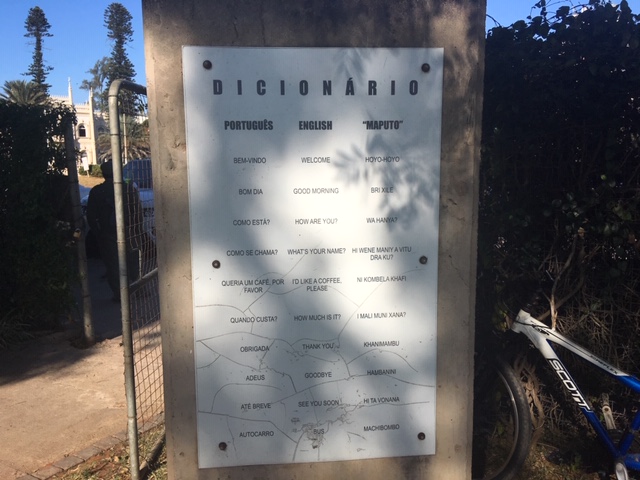
I’ve been in Mozambique for work for the past two weeks (hence the silence here). One thing I quickly noticed, which I also remarked in Cuba a few years ago, is that once you know one Romance language and a little bit of another, you basically know them all. It’s magic!

I visited Cuba right after finishing a Spanish class that had gotten me through the basics:  the most straightforward past, present, and future tenses, a lot of vocabulary, and simple syntax and grammar rules. That grounding got me about thisfar in conversations with Cubans, but that was good enough for me. Through my arduous journey to French proficiency, I’ve come to expect incremental language-learning progress, and I can now see and appreciate it more clearly.

While traveling in the Cuban countryside, I met a trio of Italians who took the same bus back to Havana with me. We had a nice conversation in English, and then they started speaking to each other in Italian. It felt like my intense week-long effort to concentrate on Spanish allowed me to open up my ears and let the Italian wash over me – and I heard the Romance in it, so to speak. I could understand the gist of what they were discussing – what to eat for lunch or something like that.

Here in Mozambique, I’ve had a similar experience with Portuguese. Funnily enough, I’ve been communicating mostly in French, since my two closest colleagues and collaborators do not speak the greatest English. French is our lingua franca. It’s been very good practice, and as in Cuba, it – and my rusty-but-still-in-there-somewhere knowledge of Spanish – has unlocked the Romance in Portuguese. I’ve learned to turn the sh sounds into s sounds, and with a few other auditory acrobatics, it’s basically Spanish. And when my Spanish isn’t strong enough to understand what someone is saying, my French fills in the gaps.

There’s been multiple moments when I haven’t needed my colleagues to translate for me because I’ve gotten a full enough sense of what someone is saying based solely on listening for the similarities between Portuguese, French, and Spanish. Now I understand what my Czech father meant when he said that he could understand Polish even though he never learned it and could not speak a word of it.

Language families are the best families! Just kidding. But they are pretty great.

Sierra Leone

IMG_8371

Finally getting around to posting about my trip to Sierra Leone, where I went for work in March. Continue reading

The saga continues

23941908765_683321247a_z

Just in case you are on the edge of your seat waiting for an update on my tale of woe…

I would like to introduce you to two close companions of mine.

Here’s Perry, my dientamoeba fragilis:

OLYMPUS DIGITAL CAMERA

I believe he took up residence in my intestines fairly recently, perhaps in Ghana. Apparently he’s a crafty guy who evades detection, so I’ll never know for sure where or when I picked him up.

And here’s Zoey, a blastocystis hominis who’s been with me for at least a year:

Bhominis_cyst

Because the consequences of harboring this particular parasite are medically unclear, when Zoey showed up in my test results last summer, my gastroenterologist decided to ignore her for the moment and focus instead on treating other things that were more likely to be causing my intestinal distress.

This time around, I saw my integrative medicine doctor before my GI, and when she discovered that I now have not one but two parasites calling my intestines home, she prescribed a ten-day course of metronidazole, which goes by the drug name Flagyl. I’m three days in and it is making me super nauseous and dizzy. It is also probably doing a lot of collateral damage to my gut, but who knows. It’s all very unclear. So much is unknown about digestive health; it’s frustrating.

Still, I’m happy to be doing something, anything, to get my house back in order. And by my house I mean my body, because what is my body if not my home? Parasitic visitors are not welcome in it. 

I saw my GI the day after I saw my integrative medicine doctor, and though she agreed with the course of treatment, she also told me not to expect too much from kicking out these home crashers. She said that achieving anything close to a balanced microbiome is tricky for people like me, and that I may still feel shitty even after the parasites vacate the premises.

Still, I’m excited about the presence (and imminent departure) of my two parasites. It means that I can possibly blame something separate from myself for my digestive failings. It also opens up a new front in the battle for my gut health. Heretofore I had been fighting again generic bad bacteria and general bacterial imbalances; now I am fighting against two very specific enemies with very specific names.

So, after leaving the first doctor’s office, I found myself happily humming a song we used to play on the record player when I was a kid, “Me and My Teddy Bear.” Only I was singing “Me and My Parasites.” I ended up writing a full adaptation that is now stuck in my head: 

Me and my parasites
They have got strong tenants rights
Just me and my parasites
They play and play all day

I hate my parasites
They keep me up both days and nights
Oh I hate my parasites
They prey and prey all day

Every night they’re with me
As I climb up the stairs
And in my guts they glisten
And give me toxic flares

But me and my Flagyl pill,
Are out to get em, kill kill kill!
Just me and my Flagyl pill
We slay and slay all day

Then me and my one body
Sans parasites and I’m set free
Just me and my one body
I pray and pray all day

I enjoyed the exercise so much that I thought, maybe I should write a book of poetry called “Rhymes for the Digestively Distressed”? It’s an uncaptured niche market for sure…

[Top photo: Osvaldo Gago; parasite photos: CDC]

the weekend is here…

IMG_9958.JPG

… and I have a few links — all from the New York Times — burning a hole in my inbox pocket. So before I leave you to your weekend adventuring, here they are:

This is science fiction come to life. Since I was a little kid frustrated by having to put my ideas into words, I have yearned for a tool that could read my mind and transfer my pre-verbalized thoughts into another person’s brain, and vice versa. I never, ever thought it was actually possible. Well, this comes pretty close:

Meanwhile, this is the story of the last three years of my life, and perhaps it resonates with your life story as well?:

I’ve been thinking a lot about “fair trade tourism” recently, and I intend to write about it here as soon as I have time to compose my wide-ranging thoughts in a somewhat organized manner. In the meantime, I found this article on ethical travel thought-provoking — especially how narrowly they defined the term for the purposes of the article.

When I read the article below, it sounded highly familiar. I searched my blog and lo and behold, four years ago, in a blog post with an almost identical title to this one, I linked to an earlier New York Times article about this same exact subject. It remains fascinating.

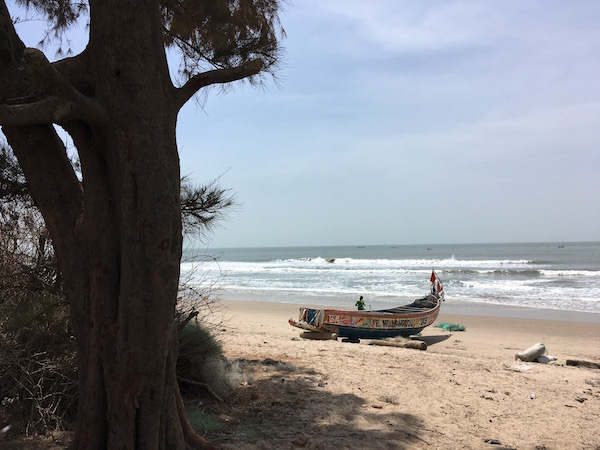
Senegal: the Casamance

IMG_8121

In March, I traveled to the Casamance region of Senegal for work. I didn’t realize until I was making the plans that I had actually been to the Casamance before, as Kolda is technically in the Haute Casamance. But the area of Senegal that is reputed to be the most verdant and beautiful is the Basse Casamance, the western section on and close to the ocean. And this is where I would be heading for work. I was pleased, to say the least. Some pictures…

Continue reading

Egúngún, right here in NYC

IMG_9842

As may have been clear when I wrote about it in February, I was in serious awe and admiration of the egúngún masquerade that I saw during the Vodoun festival in Benin. I really didn’t know much about the tradition before visiting; I had mostly just seen photos that blew my mind and convinced me to visit. Since then, I’ve been reading up on it, and the subject grows more and more fascinating with every word. It also grows more and more confusing in certain ways, due to nuances in the cultures, religions, and ceremonial practices of close but not entirely similar peoples who share the egúngún tradition, like the Fon in Benin and the Yoruba in Nigeria.  So, I will quote liberally from authoritative texts rather than try to explain things in my own very unauthoritative words.

IMG_9843

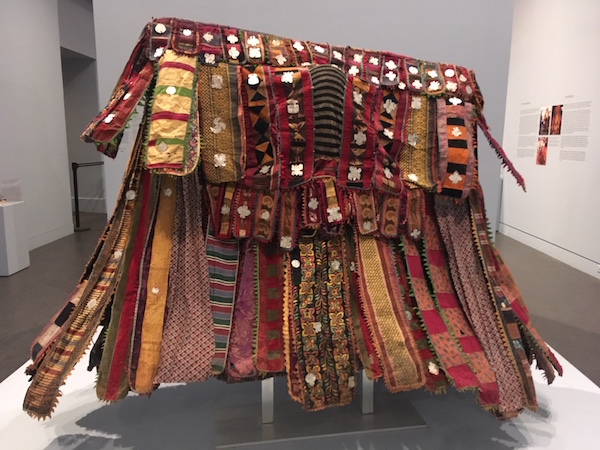
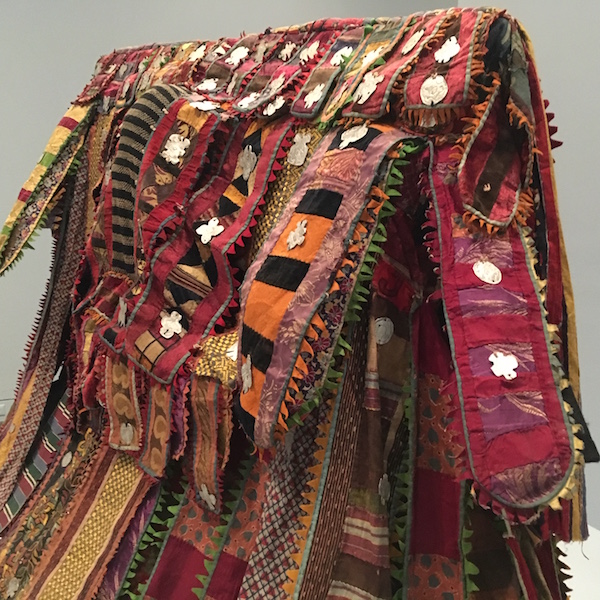
Last weekend I was excited to visit the Brooklyn Museum for their exhibit of an egúngún costume made some time between 1920 and 1948 in Nigeria by a family called Lekewọgbẹ. The museum describes the exhibit as:

“the life story of a twentieth-century Yorùbá masquerade dance costume (egúngún), from its origins in Ògbómọ̀ṣọ́, Nigeria, to its current home in Brooklyn. Composed of over three hundred textiles from Africa, Europe, and Asia, this egúngún swirls into motion during festivals honoring departed ancestors. Centuries old, egúngún is still practiced in Nigeria, the Republic of Benin, and in the Yorùbá diaspora.”

IMG_9845

Also according to the Brooklyn Museum, egúngún is a Yoruba word that can refer to three distinct but related things: “all Yoruba masquerades, a specific masking society and related festivities, and the particular masks used in those events.” Egúngún masquerades go back hundreds of years to the sixteenth century.

“Most often appearing at annual festivals that honor immortal ancestors, egúngún also emerge on special occasions or at moments of need. The masks are vessels for communal ancestral spirits and, as such, are active only when occupied by those forces or ny maskers embodying those spirits. Men who perform egúngún remain human while temporarily taking on a spiritual dimension as they physically manifest unseeable ancestral forces. As dancers must conceal their human form to achieve this, they also wear gloves and long socks; a mesh panel at the front permits them to see during performance. …

During festivals, the masked egúngún travels from the shrine or grove to the streets and public centers, accompanied by drummers, singers, ritual specialists, and crowds of followers. These festivals reunite ancestors with the living, who assure the success of their community by lavishing praise and ceremony on the returned relatives. Spreading breezes of blessing in return as it whirls and dances, the egúngún allows the ancestors to participate in the present.”

My interest was piqued when I read that the egúngún tradition is alive and well in the Yoruba diaspora, including Brooklyn. A quick Internet search led me to the realization that the annual Isese Festival featuring an egúngún masquerade is just around the corner on Sunday, June 2. It starts at 11:00am at Locks of Nu Natural Hair Salon, 2000 Fulton Street. The procession will then make its way through the streets of Bed-Stuy. It is firmly on my calendar and I can’t wait to go. If you’re in the NYC area, I encourage you to come, too!

Here’s the invite from their site:

IMG_0126

a super shitty story

IMG_6305

I don’t know why but I have been looking forward to telling this story since the moment it started with a bang. Perhaps there is catharsis in the public airing of my literal dirty laundry. Perhaps I am a perverse exhibitionist. Perhaps I just like talking shit.

On that note, I plan to italicize every statement in this post that is both literally and figuratively true. Because if I’ve realized anything over the course of this very shitty time, it’s that the word “shit” is a stand-in for basically anything and everything in American culture. Why is that? Could it be that our culture is as obsessed with poop as I am? I’ll come back to that later. First I have to tell you how this shit started. Continue reading

Ghana: Kakum National Park

IMG_6554

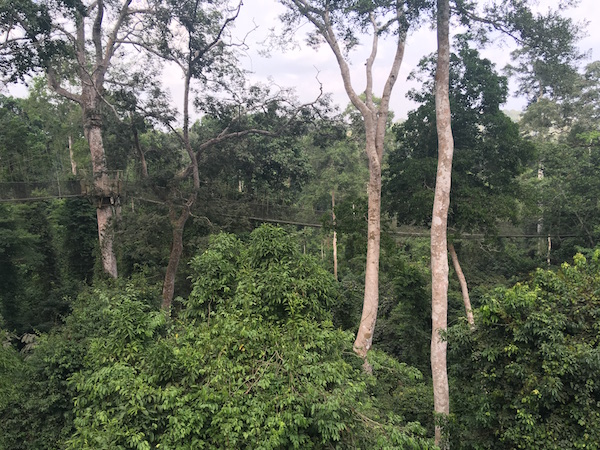
I am so behind on posting about my travels. This is the conclusion of my January vacation series, more than three months after the fact. But as you’ll soon learn, Ghana was the gift that keeps on giving, so perhaps it’s fitting that my final post about the country is written from the vantage point of someone whose body left months ago but whose digestive system remains stuck there. My next post will deal with that sordid affair, but for now let’s stick to Ghana’s natural beauty, on full display at Kakum National Park

Continue reading

I missed my blogiversary :(

hannah three little pigs.jpg

And it’s a big one – 5 years! Half a decade of hard work to finally speak French, and to consistently write in English. But on Sunday I forgot all about it in the midst of a bunch of craziness.

Had I remembered my blogiversary on the correct day, I would have realized how perfect the timing was. On Sunday I returned to New York from South Jersey filled with renewed motivation to get back on the language horse. That’s because I spent the preceding week with my family and was amazed and inspired by how my seven year-old niece has picked up Spanish practically overnight.

When I left the United States for Senegal at the beginning of January, my niece was two days into the bilingual English-Spanish program at her new school. All her classmates had started the program a half-year earlier because their parents had signed their kids up at the end of the previous school year. But Hannah and her family moved into the school district over the summer, and by the time they tried to sign her up, the program was at capacity. My brother and sister-in-law put her on the wait list and she joined the English-only track in the meantime.

In December, Hannah got the news that a space had opened up and she could start the bilingual track in the new year. My brother told me not to mention it to Hannah before I left, because she wasn’t looking forward to leaving her new friends and starting all over again with yet another set of new classmates. I thought that was a small price to pay for becoming fluent in a second language at a young age, but of course a seven year-old (six at the time) wouldn’t share that sentiment.

Cut to three and a half months later. When I hung out with Hannah, I made sure not to bring up Spanish in case it was still a sensitive subject. Instead, it was she who randomly answered a question from her mom with a Spanish response. Thinking this was my opening, I asked her how Spanish was going. Because she is seven, she couldn’t give her parents (who were in the room) the satisfaction of thinking that she had come around to their point of view, so she insisted over and over again that she hated Spanish – in Spanish. “Why?” I asked. “Porque es un otro lenguaje,” she answered in a perfect accent. In the ten minutes of Spanish conversation that followed, I struggled to remember how to say the most basic words and phrases, and she answered flawlessly, effortlessly, mellifluously. I told her that I was both incredibly impressed and incredibly jealous of her Spanish abilities and she rolled her eyes.

Yes, Hannah, I know that feeling. When I was approximately seven my mom hired a Hebrew tutor to come to the house and give me lessons after school. I still remember it with the visceral responses I had then, of life-threatening boredom mixed with intense desperation to escape. I don’t know what happened with the tutoring – I’m pretty sure it didn’t last longer than a couple of months. Maybe I moped about it so much that my mom gave in and discontinued the lessons. Thirty years later, I would give at least one good finger to go back in time and sit through those stupid lessons no matter how mind-numbing they were.

So, even though Hannah was not in the least excited about her newfound Spanish, I could not have been more excited for her. Clearly, one of my biggest unfulfilled wishes in life is that I had been raised bilingual or at least schooled bilingually. I would have saved so much trouble and hard work that way, with a better result than what I’ve got now after years of struggle and effort: inconsistent proficiency rather than fluency in French, ridiculously grasping Spanish, and exceptionally faltering Hebrew. I’d know how it feels to have two different but equally accessible forms of expression at my disposal, to toggle between two different worlds with ease. I will never know what that’s like and it really bothers me.

But, just because I’ll never have two equally balanced fluent languages in my brain doesn’t mean I shouldn’t keep trying to learn other languages to the best of my ability. Without realizing it, my niece inspired me to get back to work. I am going to sign up for a Rosetta Stone subscription so that I can learn Spanish right along with her (or a few steps behind her, more likely).

When I started this blog five years ago my goals were to move to Senegal, learn to speak French fluently, and learn Spanish and Hebrew pretty well. I would say I’ve gotten about 50% there. On my fifth blogiversary (plus a few days), it feels appropriate to set a new goal for the next five years of this blog. Here it is: Go the remaining 50%. 💪

[The photo is a drawing that Hannah gave me last week. Apparently it is the cover to a blank book about the three little pigs; I think the point was that I was supposed to fill in the book. Because she is somehow a full-on Spanish speaker after three months of immersion, she wrote the title of the book in Spanish first, and then in English.]

four wonderful things, including some (get over the) hump day inspiration

notre dame rose window_sarah sakho quote

Thing one: I was overjoyed to learn that — if we can look at the glass half-full for a moment — the damage to Notre-Dame was much more limited than it could have been:

  • Even though I saw a bunch of disheartening photos of windows missing their glass, CNN reported that all three of the massive rose windows from the 13th century along with many of the other stained glass panels survived the fire. I was sure the glass would all melt away, and I am so happy to know that much of it held out.
  • The organ was also spared, as was much of the artwork.
  • Many of the statues had been removed just days before, in preparation for the renovation work, so they weren’t caught in the fire.
  • A bunch of priceless artifacts were rescued before they were destroyed, including the crown of thorns that means so much to Catholics.
  • Had the fire reached the towers, the whole thing would have come down soon after. It didn’t, and that seems miraculous.
  • According to the New York Times, almost 850 million Euros has already been raised towards rebuilding, which seems so fitting for Notre-Dame’s 850 years of history. Some have asked why money can be raised so much more easily for a cathedral in need than for people in need, but I choose to focus on the fact that there is a need and it’s being met. I think that is a wonderful thing.

Thing two: I realized that I had inadvertently already donated to the Notre-Dame rebuilding fund by responding to the World Monuments Fund‘s annual membership call the day before the fire. I gave $45 to become an Explorer-level member (usually $50 but there was a deal during the pledge drive). This means that a. I will receive a yearly magazine about the organization’s fascinating and important work to save and restore humanity’s architectural heritage, and that b. I have contributed to that work. You can, too!

Thing three: I just learned that the 2020 Smithsonian Folklife Festival in Washington, D.C. will “celebrate (and complicate) connections between Benin, Brazil, and the United States” through an exploration of their voodoo-inflected musical and cultural traditions. You know what that means?! If you can’t bring the girl back to the Vodoun Festival, you can bring the Vodoun festival back to the girl. See you in 2020, D.C.!

Thing four: The day before I left Senegal, I had breakfast with a French-Guinean journalist friend, Sarah. We caught each other up on where our respective lives had led us over the two years since we had last seen each other, and we exchanged our conjectures and semi-formed visions about where the future might take us. At some point we realized that we were both in a similar place of finally enjoying the present moment and accepting that life was not going according to our preconceived plans, but that it was working out really well anyway. Then she casually dropped the pearliest pearl of wisdom: “Life has more imagination than we do.”

I found it so profound and thought that only someone speaking a non-native language could express themselves so poetically in casual conversation. She later told me that she had actually heard the words from a friend many years ago, had held on to them, and had passed them on to me in that very apropos moment. Regardless of who said the words first, I now think of her as a poet-journalist.

I meant to post the quote sooner because I love it so much, but I’m glad I didn’t get around to it until now so that I could apply it to the horror-turned-to-wonder of Notre-Dame surviving a blaze that could have burnt it all down.