mon oreille

ear sculpture

Tonight during my weekly French Skype conversation with Philippe, I said that if I did come to Paris this January, I would probably want to take a side trip to Alsace. He kept asking me to repeat myself because he had no idea what I meant. I said over and over again, “Alsace. Alsace. Alsace.” Finally he exclaimed, “Oh, Alsace!” I asked, “Isn’t that what I said?” Apparently the s in Alsace should be pronounced more like a z.

Immediately after my call, I headed to the laundromat to pick up my wash. I told Millie, the Latina woman who works there, that I was thinking about taking a Spanish class this spring and that if I did I’d start talking to her only in Spanish. Forgetting all about actual conjugation, I added, “Tratar,” which means, “to try,” though I intended to tell her, “I’ll try.” Millie kept asking me to repeat myself. I said over and over again, “Tratar. Tratar. Tratar.” Finally she exclaimed, “Oh, tratar!”

So there you have it. I can learn all the French and Spanish in the world but people are still going to have no idea what I am saying because my ear and my accent are so terrible.

Merde! (Another word I cannot pronounce correctly.)

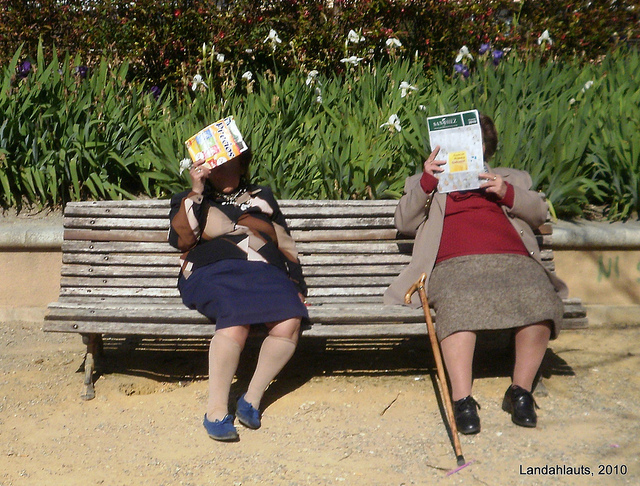
(Photo: Colin Mutchler)

My own personal not-very-dramatic cliffhanger

selfie in the parkMy new miles credit card arrived in the mail and I was thisclose to registering for the NYU Spanish class with it, but nagging doubts held me back. Is it completely stupid to begin studying one language when you are just getting the hang of another one? Will it confuse my brain and ensure I learn neither French nor Spanish effectively? Wouldn’t it be a more satisfying use of $500 to go on a vacation somewhere Spanish-speaking instead? Or to put the money into my savings account towards my immersion sabbatical? Do I have the discipline to attend three hours of class each week after eight hours at work? And will I actually put in the time to do any of the homework when I already spend two nights a week practicing French?

Then there are the misgivings about my nascent plan to spend my winter vacation in Paris. Why on earth would someone with seasonal affective disorder go to a place that’s even grayer and damper than the one where she lives? Shouldn’t sunshine and heat be on my agenda instead? Why would someone with limited funds go somewhere she has been before and did not feel the need to ever go back to? Is it not silly to spend my one week out of town in another humongous town, doing things that are the French equivalent of the same things I do back home?

Both decisions seem like they come down to one central question: Will I allow myself to embrace plans that are completely illogical simply because I really want to do them?

Stay tuned to find out…

(Photo: my most contented moment in Argentina, posted here to remind me that sometimes the best decisions are also the most random ones, made by an inscrutable heart.)

stockpiled links

bathroom readers

Have been meaning to share these for awhile… Luckily none of them are time-sensitive and perhaps they even get better with age. 🙂

Awesome idioms from around the world (my favorite is the Polish one)

Andre in Argentina! (My personal motherlode – French practice & Argentine nostalgia)

Ways (beyond Duolingo) to learn Spanish on your phone

A new (beautiful) French bookstore has opened in NYC

How to be French

This book sounds right up my alley

So does this one about French food idioms

folletos y signos

folletos

In the waiting room of the doctor’s office recently, I read the “patient’s bill of rights” in Spanish. Pamphlets are extremely easy relative to other reading materials, since they stick to simple language and sentence structure so that people at any reading level can comprehend. They are therefore an excellent way to convince yourself that you know more of a language than you actually do. What a pick-me-up!

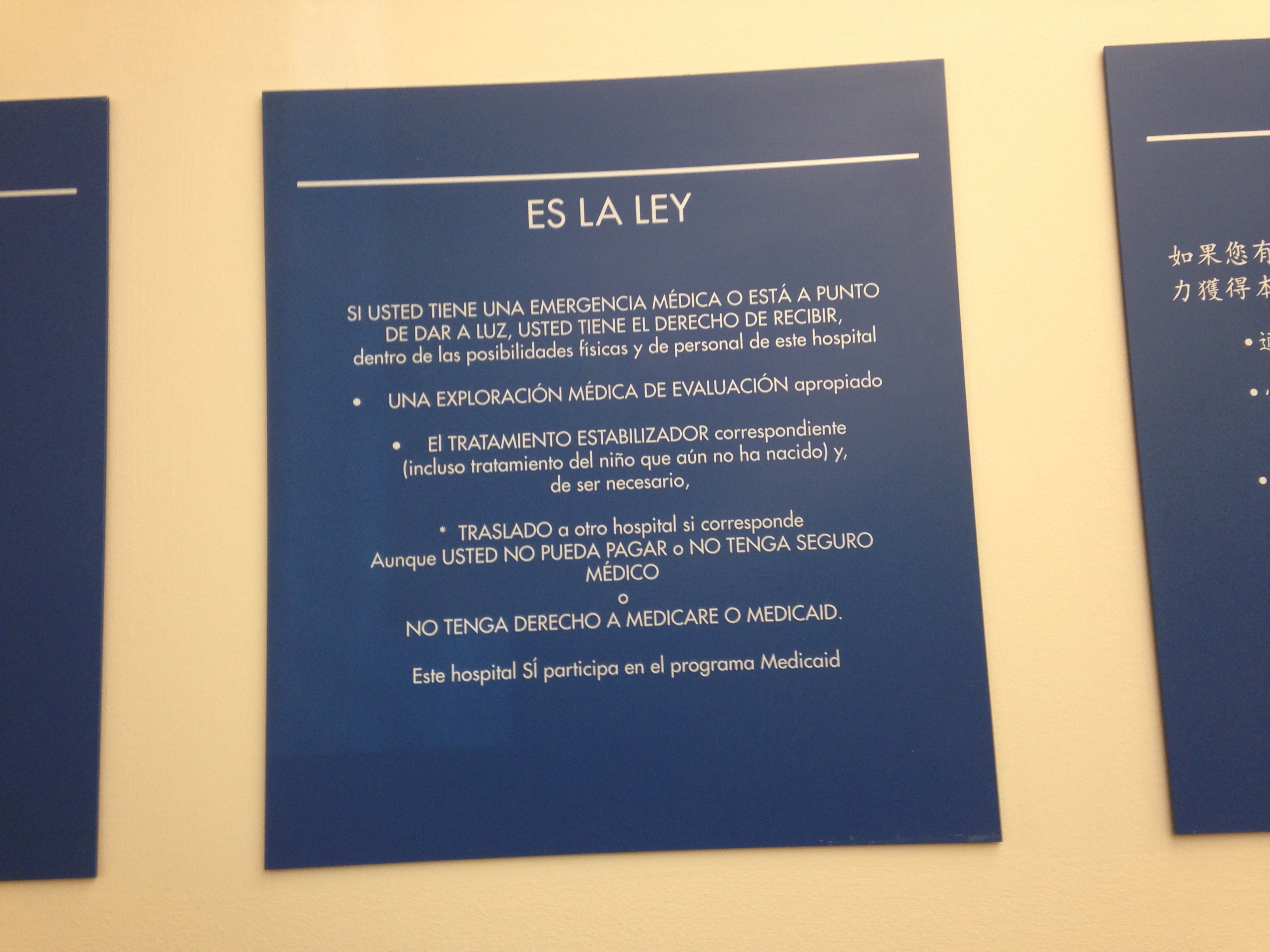
On a related note, here’s a sign I once saw in the hospital:

es la ley sign in hospital

At first I thought dar a luz must mean something about giving out to the light, i.e. fainting, but then at the mention of del nino que aun no ha nacido (the baby that is not yet born) I realized I might be a wee bit off.

The English version confirmed my suspicion:

it's the law sign

Isn’t it cool that in Spanish, “to give birth” translates literally as “to give to light”? I love it!

(Top photo:Landahlauts)

11 things there are a lot of in the Philippines

So much to say about the Philippines but I will start with this thought: I love staying in a place long enough not only to observe the little things that are culturally different but also to discern which of those things are ubiquitous and truly significant. When you spend enough time to notice something over and over again, it makes you feel you are getting to know the culture on more than just a surface level.

For example, one day we drove past kids playing basketball on a roadside court surrounded by wilderness. I wasn’t sure if it was an anomaly or a thing. Within a few days I realized the courts are everywhere (everywhere in the middle of nowhere). Apparently Filipinos love basketball and they also love putting their courts in the most random places (including on an actual road, so that we had to drive through the court to get where we were going).

In no particular order, here are 11 things I saw everywhere during my 11 days in the Philippines:

AFFECTIONATE SCHOOLKIDS

The boys all walk home with their arms around each other’s shoulders and the girls hold hands or link elbows.

affectionate schoolgirls

affectionate schoolboys

TUK TUKS (WHICH THEY CALL TRICYCLES)

There are so many scooters in the Philippines, and most seem like they are being used as taxis. They load them up with a death-defying number of people til they look like clown cars, with multiple people riding on the seat behind the driver, multiple people in the sidecar, and multiple people on the roof of the sidecar holding on to one measly handlebar.

tricyclestricycles loaded up with people

VULCANIZING SHOPS

I kept seeing tires on the roadside advertising these shops. I realized I have no idea what vulcanizing means. Apparently it is what you do to patch holes in tires.

vulcanizing shops

SODA BOTTLES FILLED WITH FUEL

I first assumed they filled Coke bottles with a homemade punch-like brew but later learned it is actually gas for all the scooters.

gas in coke bottles

STORES WITH THE MOST STRAIGHTFORWARD NAMING CONVENTION EVER

I found it hilarious that most stores took a what-you-see-is-what-you-get approach to their names: the first word was the person’s given name, the second word was the type of store. Everywhere I looked it was Louisa’s Bakeshop or Fernanda’s Store or even just Mary Store, no apostrophe needed.

stores named after people another store named after people

EYE CANDY JEEPNIES

These mini-busses are franchises, so the driver can decorate the vehicle to his liking. The results are amazing. (Also amazing: riders climb in the back wherever they happen to be when the bus passes by.)

jeepnie

jeepnie

jeepnie

jeepnie KTV BARS

KTV = karaoke

ktv bars

MILLIONS OF DOGS ROAMING FREELY

(Not to mention freely roaming water buffalo, and hogs, and goats, and ducks, and chickens…)

another roaming dog roaming dog

CHICKEN ARROZ CALDO

Traditional breakfast porridge that was a gluten-free god-send. Not pictured because I liked mine no frills: the tiny limes (called calamansi), fried garlic, and green onions usually sprinkled on top.

chicken porridge

THE AFOREMENTIONED BASKETBALL COURTS 

basketball court

basketball court

PINT-SIZED BANANAS

baby bananas

baby bananas

And one more for good measure:

REMNANTS OF SPANISH COLONIZATION

I noticed just a few Spanish words and culinary influences, but the most visible evidence of the former Spanish presence were the grand old cathedrals cutting a strange and imposing figure in the midst of hut villages.

remnants of spanish colonialization

A few other things I didn’t get photos of: 

A million Jollibees, the McDonalds of the Philippines (and to my chagrin, the welcome signs to villages were often printed on signs featuring the bee)

Garlic rice – i.e. rice with fried garlic chips in it – served with everything

Freestanding shrines with statues of Mary in them

Frogs hopping along the roads at night

Laundry drying on lines and over fences

Rice paddies

Rain, rain and more rain (it was rainy season)

And the more abstract things you can’t really capture on camera: 

A predilection for sweet-tasting everything

Lots of religious faith

Air fresheners that smelled like chemical lemongrass and made me nauseous

Some of the warmest people I have ever met

on sufferfest-ing

Sarah Marquis

The story in The New York Times Magazine about Sarah Marquis, a 42 year-old Swiss woman who walked 10,000 miles of wilderness in 3 years, alone, and endured all sorts of crazy natural and man-made calamities along the way, was excellent food for thought. Her need to test herself in isolation, to persevere over seemingly arbitrary challenges that she fashions for herself, to travel and experience huge swaths of the earth on rather trying terms – all in search of an “inchoate feeling” that gives her life substance – seems bonkers and maladjusted, yes, but somehow also completely self-actualized and inspiring.

This line especially spoke to me: But perhaps the reason to court a sufferfest – to explore or adventure, or whatever you want to call it – is that it makes a person feel alive.

I’m no Sarah Marquis by any stretch of the imagination. My personal extremes are about eight thousand times less extreme than hers. But the compulsion to go to them is familiar to me.

In fact, I seem to be courting sufferfests right and left these days. Learning French and (pretending to learn) Spanish are the ones I talk about here – but there are many more. Sometimes there is no reward, only suffering. But sometimes it all pays off and there is a feeling of extreme exhilaration and purpose. I am in the midst of a work-related sufferfest right now that I’m hoping will come out on the side of the latter. Only time will tell…

(Photo: Joel Marquis)

why learn Spanish, part 2

Isabel Allende's Eva Luna

Because Isabel Allende’s “Eva Luna” must be even more beautiful in its original language.

I’m reading it in English now on the recommendation of several people who told me that if I love Gabriel Garcia Marquez I’ll love her, too. They were right. I’m halfway through and absorbed in the story in a way I haven’t been since grade school. I read it every day on the subway to and from work and am amazed when I find myself at my destination seemingly without commuting.

On Monday I skipped French conversation to go to a filmmakers’ gathering at a bar instead. When the bartender saw me carrying “Eva Luna” she broke into the hugest smile and just gushed and gushed about how much she loves Allende and how halfway through “The House of the Spirits” (which I’m planning to read next) she put the book down because she never wanted it to end.

Can you imagine if something is that powerful in translation what it must be like in the original?

One day! One day I will know, because I WILL learn enough Spanish to at least take a clumsy stab at it. Con Dios como mi testigo. I should learn that phrase in every language, I seem to use it far more here than, “Where are the toilets?”

P.S. Why learn Spanish, Part 1.

the slow decline

star wars lego man sisyphusI don’t know why I’m so discouraged. I have been going to French conversation Meetups every Monday, and this past Monday I even Skyped with Philippe from home and then immediately hopped on a train to talk French some more and then caught myself talking to myself in French on the way home.

But I originally committed to a half hour a day of French and a half hour of Spanish, and I have now all but abandoned Spanish and reduced French to conversation alone. I’m afraid all the progress I made through the hundreds of hours of work I put in at the outset are going to disappear.

So, I need a new plan. I am thinking about signing up for a Spanish class, maybe through Fluent City. I also think my company may have renewed its Rosetta Stone license in which case I can try to do a Spanish course that way. I’ll try to watch one episode of Destinos every weekend because I do wonder whatever happened to Raquel and whatshisface (sure sign it’s been too long). Oh yeah, Arturo! I wonder what happened with Raquel & Arturo’s overwrought romance.

And maybe I will start reading French books as a way to jog my memory about verb forms and vocab I keep forgetting. I need to bug Thomas for one of his novels. Thomas, if you’re reading… bring on the books!

I guess I was overambitious and need to lower my expectations for myself. There have been other things I’ve become interested in doing that I wouldn’t have time for if I kept up the hour-a-day routine. It’s not because I’m lazy, it’s because I lead such a jam-packed, engaging life. Yeah, that’s what I’ll tell myself…

(Photo: Kristina Alexanderson)

fascinating mapinating

Slate's language map of the United States

There are only seven states whose most common language other than English is not Spanish. But when you take español out of the mix, things get a lot more interesting. And surprising, at least for me – I would have thought Chinese would show up more often, and German and French less.

See the Slate article this map comes from for more maps, of the most commonly spoken Native American, Scandinavian, Indo-Aryan and African languages state by state. America is truly a polyglot paradise, so much richer for all the languages we speak. (And by ‘we’ I refer to us collectively, since we all know that I’m the sad sack who only really speaks English.)

oh, duolingo

duolingo reminders

I was in Vermont for a wedding this weekend and on the train trip back to New York I opened Duolingo for the first time since completing the Spanish and then the French lessons a couple of months ago. One of the app’s neat features is its built-in review component that allows you to do a quick and dirty refresh of the sections you’ve already passed. So I did a little bit of Spanish and a little bit of French.

I was reminded why I love Duolingo so dearly when I was served up this gem for translation into English:

Soy un pingüino.

Sure, why not?

The next day I got two emails in a row from Duolingo, one a reminder to keep up my Spanish studying and another a reminder to keep up my French. Apparently in the Duolingo food chain, it’s a penguin’s job to keep the owls happy. (I’m not doing such a great job these days.)

Screen Shot 2014-08-11 at 4.41.27 PM