Mauritania

On December 1, I flew to Nouakchott, Mauritania to start a 4-country shoot about people who are locally active in the movement to abandon FGM, or female genital mutilation (also known as female circumcision or excision).

The first thing I noticed about the country was the amazing breadth of awesome outfits worn by both men and women, a result of the confluence of West and North African cultural influences (mostly, I think, Arab/Berber, Wolof and Fulani). As someone already conspicuous in my outsiderness, I didn’t want to take photos, but this Google image search is sort of representative.

The next morning we left for Kiffa, an eight hour drive into the Sahel desert, before dawn. Continue reading

Ová it

When I used to do silly things as a child, my mother would tsk tsk me, “Rootie Schtootie,” because schtoot in Hebrew means nonsense. Today I am Rootie Schtootie-ing myself on her behalf, because my idiocy / vanity has cost me my best West African adventure yet. (Though my mother – who is, to put it mildly, not a fan of my travels – will be thrilled.) Continue reading

Benin

This is going to be a quick and dirty recap, since I should have been in bed an hour ago to get enough sleep before heading out for my next shoot, in southeastern Senegal, tomorrow at 7am. Continue reading

Havana mi amor

This day last year was a very, very good day.

It started with me getting high as a kite on my first espresso in maybe ten years, at a paladar in a nondescript apartment building overlooking the city and the sea…

I then proceeded to the Callejón de Hamel to hear a Sunday rumba session that got me higher than the espresso did. The woman above was one of the dancers, and she floored me. Too bad my internet connection stinks or I would upload one of the videos from that day, which I keep on my phone for emergency pick-me-ups.

Then I ran into the guys above, just up the block…

…followed by this man, who called me over to ask me in very broken English where I was from. When I answered, “The United States,” he exclaimed, “Elvis Presley! Whitney Houston!” before starting to strum “The Boogie Woogie Bugle Boy” on his guitar. I sang the words and danced along in the middle of the street, feeling like I was in my own private movie. He gave me his address and mimed a request to send him the pictures I took. Since the resumption of mail service between Cuba and the US had been announced that very week, I promised him I would. And I did, though I will never know if they reached him, and what he thought when he saw his face smiling back at him.

Then I took a walk to visit these guys…

…and I quite literally pinched myself because it felt like a dream. The same feeling I had in Burkina Faso, where I was shooting this week. When you finally get somewhere you’ve wanted to go for years and years, it’s almost unbelievable to actually be there.

And the dreamlike feeling was also because it was as much time travel as geographic travel. Scenes like the one above needed absolutely no airbrushing to look like the golden age of Hollywood. Midcentury is such an emotional punch in the gut for me. I don’t know why. Maybe I grew up in the 50s in my past life.

And thus concludes the epic romanticization of one of the best days of my life, one year ago today.

[P.S. I “stole” this post from my Instagram account, where I also posted photos from the shoots I just finished in Mauritania and Burkina Faso.]

South Africa part 2: Johannesburg

In Johannesburg I stayed with an acquaintance of an acquaintance. About two years ago I met up with someone I had briefly worked with on a couple of projects, and I mentioned that I was planning to move to Senegal. He put me in touch with an Irish woman (whom he had never met but with whom he had somehow conversed in an online artists community, maybe?), who also worked with non-profits, had moved to South Africa a few years before, and was perhaps a kindred spirit who might advise me on my journey. I Skyped with her from New York, she was wonderfully supportive and helpful, and before we hung up she invited me to stay with her and her partner in Johannesburg if I ever made it that way. At the time I joked, “Sure, why not travel from one end of Africa to the other? See you in a few months!” But in the end, that’s exactly what happened. Continue reading

South Africa part 1: Cape Town

I’m about to set off for four new places, and I’ve still got a bunch of catching up to do with posts about the places I’ve already been to…

So here’s a rundown of the Cape Town portion of my Ethiopia / Tanzania / South Africa tour, and I’ll attempt to follow this with Johannesburg and possibly Benin before I leave town tomorrow evening: Continue reading

Thanksgiving in Dakar

A belated happy Thanksgiving to all who celebrate! Last week was stressful, between planning against the clock for a 4-country shoot that begins on the 1st of December, and trying to pull off an American Thanksgiving in Dakar at the same time. I am affectionately calling last Thursday’s festivities the toughest producing job of my life. But, in the midst of the madness, I did take the time to count my blessings and to acknowledge all that I’m grateful for. Which is so, so, so much this year.

Including the Thanksgiving meal itself. Until the moment everything was on the table, I wasn’t sure I could pull it off. We didn’t even order a turkey until the day before. The price for a 13 pound bird? Almost $60. Turkeys are rare and thus expensive here. Having never cooked one before, having found no pan big enough to hold it, and having realized too late that I had neither a grill to lift the turkey off the pan (apparently very crucial) nor sufficient time to marinade the bird (also important), the possibility of a very expensive turkey fail weighed on me as I went downtown to pick it up from the Lebanese poultry shop at 9am on Thanksgiving morning.

But here is what happened. As soon as I got back to the house, Madame Lo – who had never seen a turkey before in her life – went to work washing and gutting the thing I was too grossed out to touch, patting it dry with a towel, rubbing it down with a marinade we left on for an hour, and then wiping it away and replacing it with so much smeared-on butter that it gave new meaning to Butterball. She also stuffed some of the herb mixture between chunks of the flesh, Senegalese-style, and when it was time to close up the bird after jamming the (American Food Store-bought) stuffing in, she shoved her brochette skewers into the bird, snapped off the wooden handles and bent the metal into staples like the Incredible Hulk, and hand-stitched any remaining holes together with cooking thread. It looked like Frankenstein but the job was done, and after plopping the turkey onto a found-at-the-very-last-minute tinfoil pan (which we filled with quartered onions and a quarter-inch of apple cider that the Internet told me was a suitable replacement for a grill), it was ready for the oven…

…which is on the second floor. Under the weigh of its contents, the pan buckled and almost broke on the way up the stairs. Then there was the problem of the temperature. I knew the turkey was supposed to cook at 350 degrees Fahrenheit for about 3 hours. I had converted that to Celsius, only to recall that the Lo’s oven isn’t marked with temperatures but with the meaningless numbers 1 through 8. So I had to check on that thing – with the only meat thermometer I could find, an unreliable non-digital version – every five minutes for the last three hours of cooking. When it finally came out of the oven I had absolutely no idea if it was undercooked, overcooked, cooked on top but not bottom, or what.

The Lo’s have two women who come to do the cooking and cleaning on weekdays, and Madame Lo wrangled them to help me prepare the other dishes. I would have been sunk without them, though the three of us made a rather ridiculous group: they were completely unfamiliar with everything I wanted to make and the ways I wanted to make it, and I sort of was, too. I’ve been making some of these dishes for years, but in Dakar I had to come up with creative ingredient substitutions and use completely different cooking tools. It’s somewhat shocking to me that we made it work.

One dish that actually turned out better the Senegalese way was the sweet potatoes, which we cooked on the grill that they usually use for fish.

And a French baguette beats Wonder bread any day (though I know this from past and not current, i.e. gluten-free, experience.)

Speaking of which, the pumpkin and apple toffee gluten-free tarts that I ordered from a German baker who has a counter at the American Food Store were better than anything I could have whipped up. And it meant that we had an American, Senegalese, Lebanese, French, and German Thanksgiving. Exactly as it should be.

I wasn’t sure how the Lo’s would feel about the meal. I’ve cooked for them a few times before and I’m never sure if they are being polite or truthful when they compliment the food (except for Mamie, who is without fail so effusive that I know she can’t be faking it). But this time they all went as nuts as Mamie usually does. They were in especial rapture over the (miraculous) perfectly cooked turkey, the pumpkin pie, and the green bean casserole, all of which they had never tasted before. Which meant that Mamie had to take it to a whole new level. She took off work early the next day to come home for the leftovers lunch.

Now Madame Lo is talking about making turkey for Christmas instead of their usual mutton. And I’m thinking of surprising them with another pumpkin pie that day. It’s amazing how much joy sharing food between cultures brings.

[P.S. In the first photo, from left to right is Monsieur Lo and Madame Lo (I really call them that, which I find both hilarious and heartwarming), George (a friend of Tantie’s), Tantie aka Armande, and Mamie aka Cecile. Felix is the oldest son and he no longer lives at home, Cecile is in her early 30s, Andre is in his mid-20s (and not pictured because he was working late), and Tantie, at 22, is the baby of the family. This is how I ended up living with them.]

Tanzania part 2: Zanzibar

After our safari adventure, Randy and I flew to Dar es Salaam, where we spent a day seeing the sights before taking the ferry to Zanzibar the next morning. Dar paled in comparison to Zanzibar so I’ll just skip it and get right to the good stuff. Continue reading

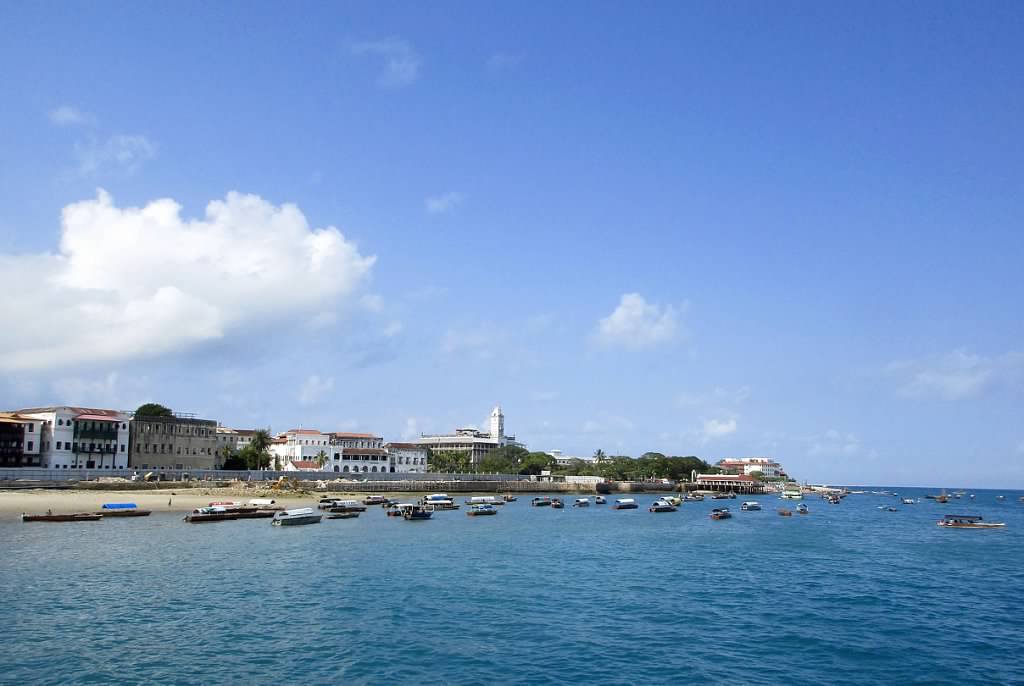
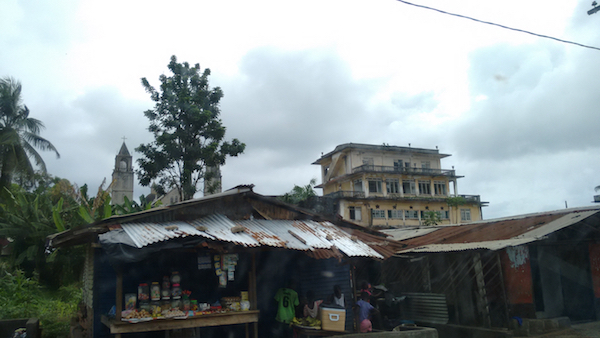
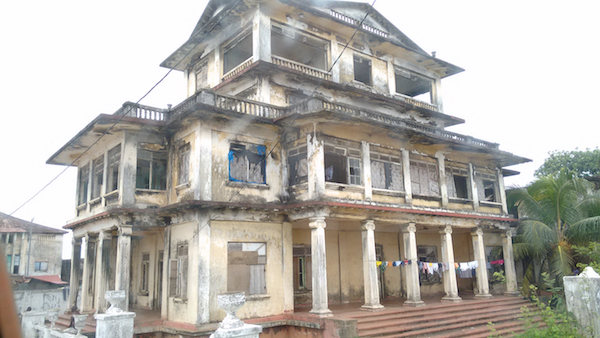
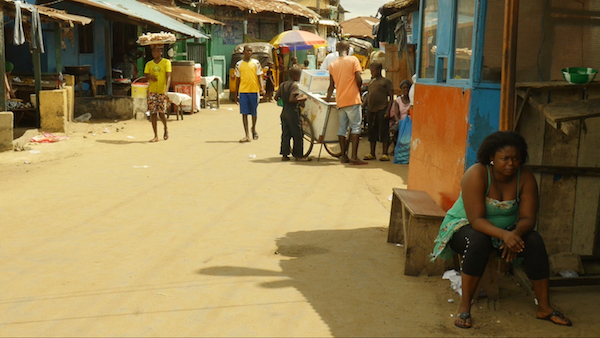
5 intriguing things about Liberia

I’ve been meaning to write a post about certain things that struck me while I was in Liberia months ago. These “things” are all fairly nuanced and a certain amount of research is required to delve deeper into the whats and hows and whys in order to write intelligently about them. I started the research but never finished it, and at this point it doesn’t seem like I ever will. The problem is that I still want to write about the things that struck me.

So what I’m going to do is throw them all out there half-formed, like conversation starters as it were, and I’ll let you do further research yourself, should you be so inclined. I’ve even provided links for you! But I make no claims as to the veracity of the information within those links. So basically I’m not very helpful at all…

1. There is a dual currency system.

In Cuba there are two official forms of currency: one tied to the American dollar and used mostly by tourists (the CUC), and one subject to crazy inflation and used mostly by everyday Cubans (the CUP).

In Liberia, it goes one step further: the actual American dollar is one of the two forms of legal tender. For example, my ATM in Monrovia spit out my money in US dollars. I was able to use it throughout Monrovia, though it wasn’t widely accepted in the countryside. Also, the value of Liberian currency is tied to the value of the American dollar somehow. I find that fascinating, and yet meaningless because I never took an econ class in my life and have no idea of the implications.

More on this here.

2. Its origin as a colony for African Americans who were formerly enslaved in the United States is fascinating in itself, but the way in which that origin has impacted its history up until the present day, is also intriguing. (For example, ethnic tensions rooted in colonization at least partially influenced the Liberian Civil War that wracked the country for fourteen years from 1989 – 2003.)

I’m going to link to Wikipedia here and let you do further digging if you so choose.

3. It has an interesting (to use the most neutral term possible) relationship with several countries.

The United States: because of aforementioned history and close political ties.

China: because the Chinese are building roads and who knows what else across the country in exchange for… well, I’ll leave that up to you to decide.

Lebanon, or rather the Lebanese: Because there is a huge Lebanese diaspora in Liberia (and throughout West Africa). In Senegal, the Lebanese, as former French subjects in a former French colony, did well for themselves. They are full-fledged Senegalese citizens who own a large proportion of the wealth and businesses here. But in Liberia, where citizenship requires you to be of black African origin (yet another fascinating subject), the Lebanese are barred from owning businesses, because there’s another law that says only citizens can do that. So the Lebanese apparently have shadow partnerships with Liberians, who officially own the businesses while the Lebanese manage them.

More on American-Liberian relations here.

More on the Chinese in Liberia here, and about Chinese investment in Africa here and here.

More on the Lebanese in West Africa here and here.

There’s also a fairly new book about the Lebanese in West Africa that I’d like to read.

4. Liberia has some exceptionally strong and politically powerful women, most notably the President, Ellen Johnson-Sirleaf, and the leader of a women’s group that was integral to ending the civil war, Nobel Peace Prize winner Leymah Gbowee.

And yet, levels of sexual and domestic violence in the country are off the charts, and laws to protect women and punish perpetrators are fairly new (and often weak), or nonexistent. For example, spousal rape was only criminalized in 2006.

I find this contrast really thought-provoking.

5. This is a small thing, but I found it fascinating that almost every shop in Liberia was called a “business center.” I guess my larger fascination is with the evolution of Liberian English and with its particularities and distinctions from American and British English. For example, I loved that they don’t use the word “pregnant” there – they say that the woman “got big belly.” And diarrhea is known as “runny stomach.” (These are the things you notice when you’re working on a video about public health.)

More on distinctive Liberian vocabulary / speech here.

time travel in Dakar

A few hours ago, I stopped to take a picture of this amazing truck only to discover more amazingness inside…

It was a baguette van making its early evening deliveries! When I got closer I could smell the scent of freshly baked loaves wafting out the windows. I wished Robert Doisneau were around to properly capture the magic. But alas, just me and my iPhone.

I bought a newspaper-wrapped baguette at an appropriately circa 1950s price – about 30 cents – and whistled my way home. (Sadly, my gluten-intolerant self can’t actually eat the baguette but someone in my household will!)